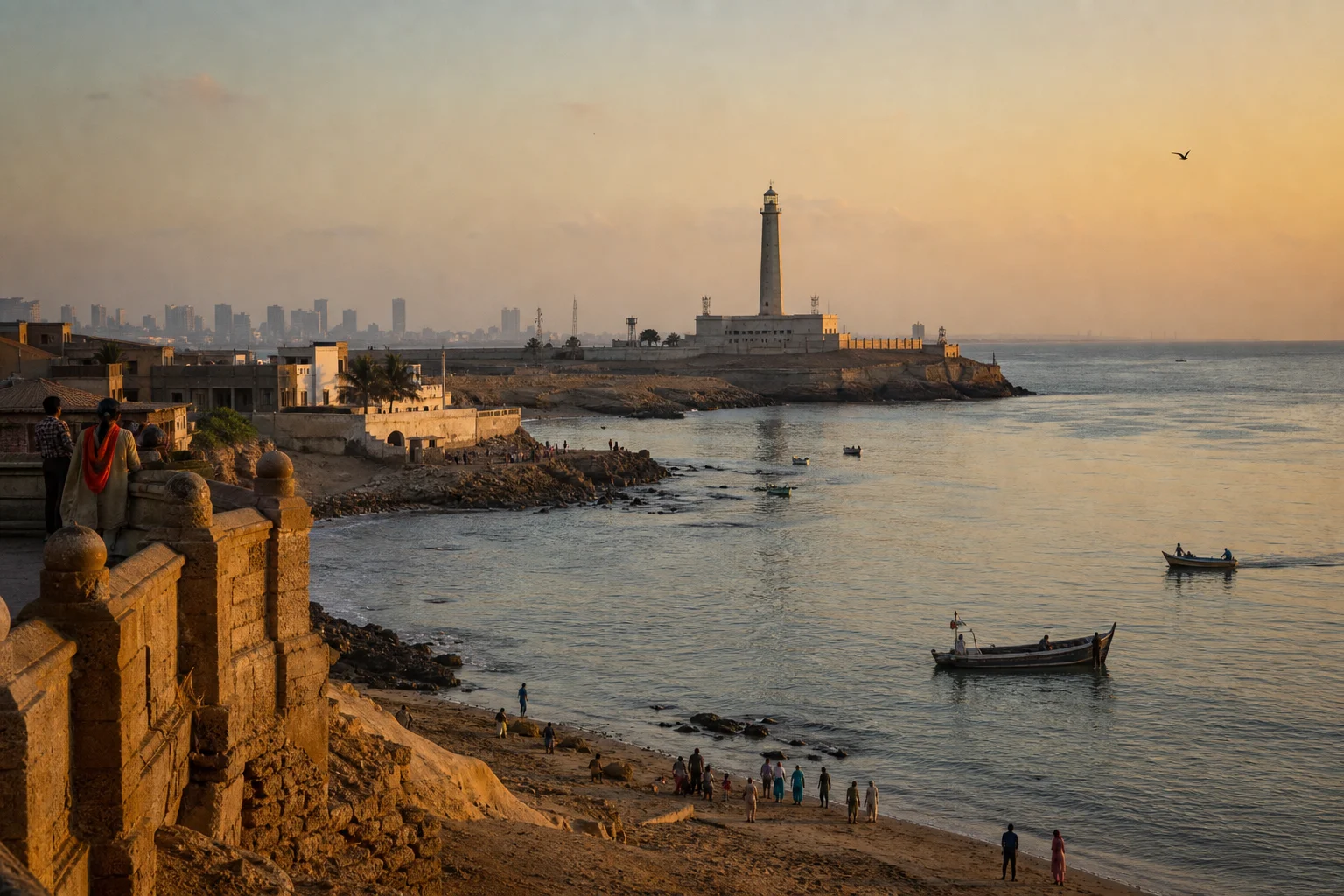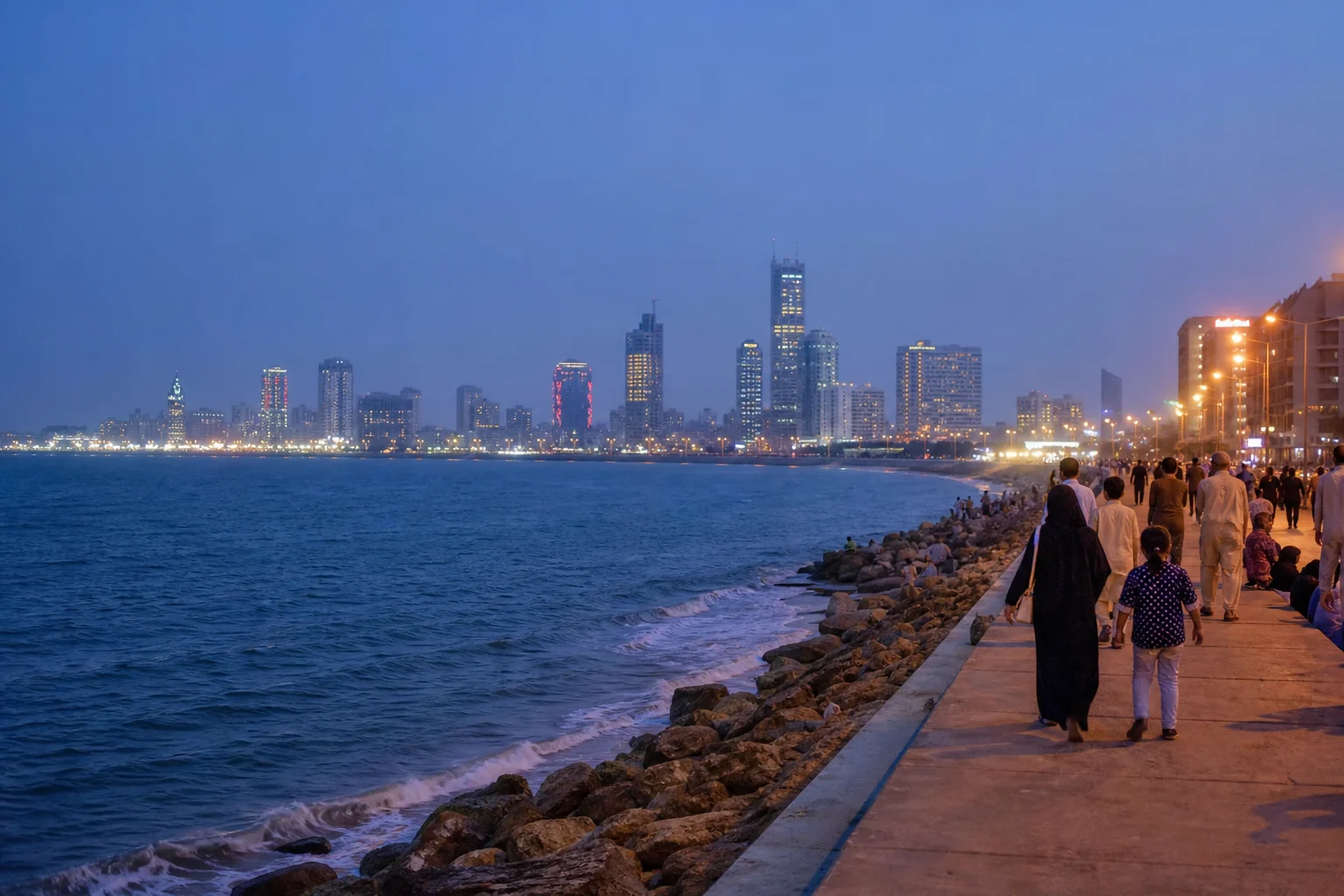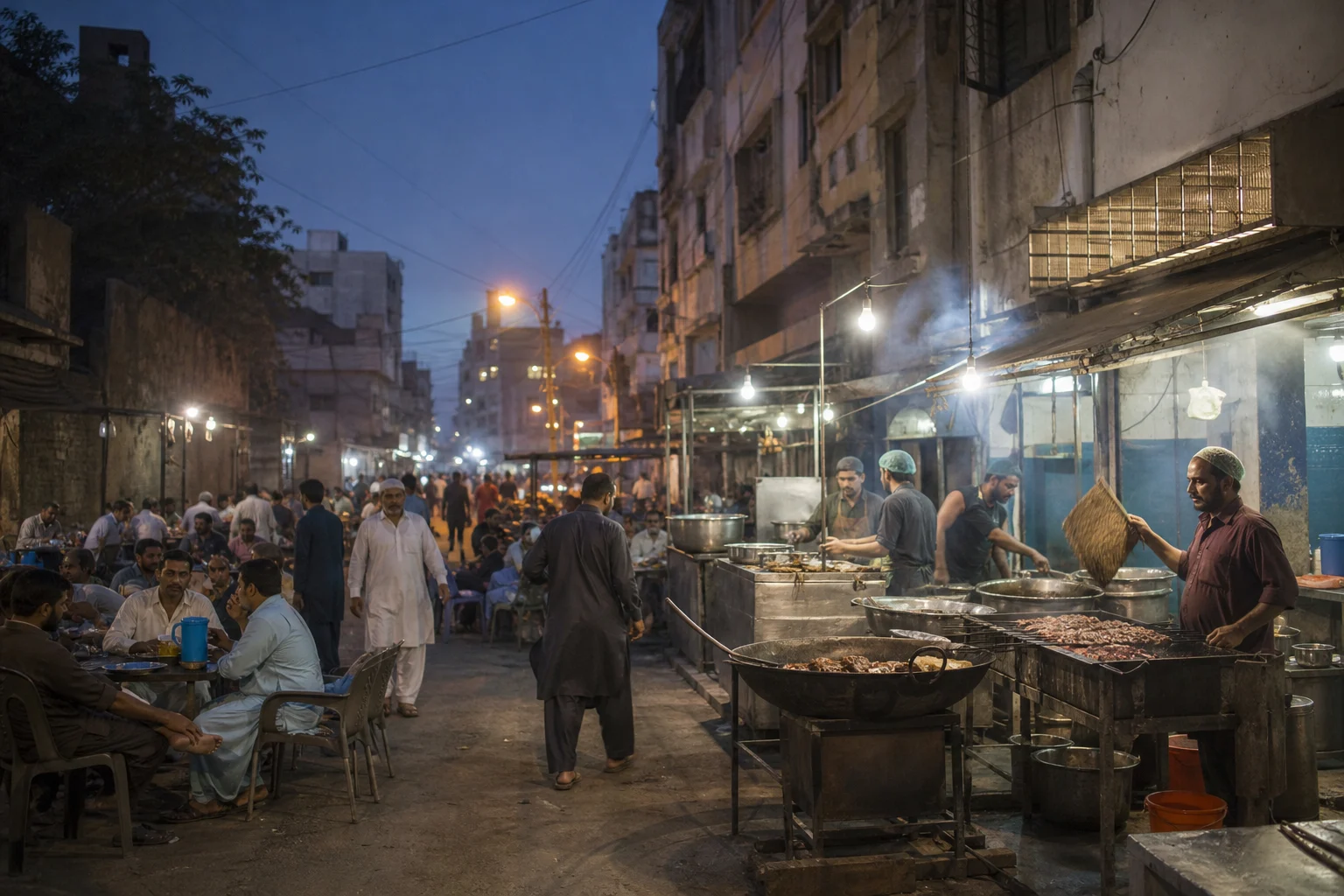
By evening, Burns Road announces itself before it comes fully into view. There is the hiss of oil meeting batter, the sweet, heavy scent of reduced milk, the smoke of meat over coals and the deep perfume of a stew that has been cooking for hours. Motorcycles edge through gaps in the crowd. Servers carry plates past closely set tables. Families, office workers, students and old friends gather beneath shop lights that turn a short stretch of central Karachi into a theatre of appetite.
To call Burns Road simply a food street is true, but incomplete. Food is the reason people come; history is what gives the food its particular force. This is a place shaped by Karachi’s growth from colonial port to post-Partition capital and vast migrant metropolis. Its kitchens preserve not one pure culinary tradition but a practical, generous urban mixture: recipes remembered from cities left behind, ingredients and habits rooted in Sindh, and the constant adjustment required by a city that has never stood still.
A name from an older Karachi
The road is commonly written as Burns Road, although the older spelling Burnes is also widely used. It is generally associated with James Burnes, a nineteenth-century Scottish surgeon whose work in Sindh belonged to the wider colonial world of British expansion. The name remains a small, everyday reminder that Karachi’s map contains many layers: local settlements, mercantile routes, colonial planning, post-independence renamings and the names residents themselves continue to use.
Yet the present identity of the street was not made by its colonial namesake. It was made in kitchens, shops and rented premises, and by customers willing to cross the city for a familiar bowl or a late-night plate. The surrounding area sits within old central Karachi, close to commercial neighbourhoods that have long connected markets, workplaces and residential quarters. That position mattered. A successful eating street needs more than good cooking; it needs a steady circulation of people with different schedules, budgets and reasons to pause.
Burns Road developed its reputation over decades rather than through a single master plan. Its restaurants and stalls grew alongside a dense urban neighbourhood, where food could serve breakfast seekers, workers between errands, shoppers, families on an evening out and diners looking for a meal after the rest of the city had begun to close. The result is not a museum display of “traditional food”. It is a working street in which tradition survives because it continues to be ordered, cooked, judged and adapted every day.
Partition, arrival and the work of starting again
The decisive transformation came after 1947. Partition brought immense human disruption across South Asia, and Karachi received large numbers of Muslim migrants from different parts of India while many of the city’s earlier residents departed. The change was not only demographic. It altered the city’s languages, occupations, neighbourhoods, domestic routines and public tastes. Karachi became a place where displacement and ambition lived side by side.
For families arriving with uncertain resources, food could be both memory and livelihood. A recipe did not require a formal archive to travel. It could be held in a cook’s hands: the order in which onions were browned, the texture expected of minced meat, the patience needed to soften shank in a sealed pot, the point at which milk had reduced enough for rabri. Such knowledge could move from a home kitchen to a small commercial counter, then to a restaurant whose name became known well beyond its lane.
Many accounts of Burns Road’s food culture connect its growth to families who came from Delhi and other north Indian cities and towns after Partition. That association helps explain the prominence of dishes often linked with the foodways of older north Indian Muslim urban centres: slow-cooked meat stews, robust kebabs, wheat-and-lentil preparations, rich breads and milk-based sweets. But the story should not be narrowed into a single line of descent. Karachi has always been sustained by exchanges across Sindh, the wider subcontinent and the Arabian Sea. A street meal may carry a remembered Delhi-style technique, be prepared with supplies from Karachi’s markets, and be enjoyed by people whose family histories lie in Sindh, Punjab, Khyber Pakhtunkhwa, Balochistan, Bengal, Gujarat or farther afield.
That is why Burns Road is best understood as a record of migration without being reduced to nostalgia. It demonstrates how migration remakes public culture. What begins as an effort to retain a taste of home can become part of a new city’s shared inheritance. The recipes keep their family accents, but the street belongs to everyone who participates in its rhythm.
The grammar of the meal
The most revealing way to encounter Burns Road is not to hunt for one definitive dish. It is to notice how different foods fit different hours and moods. Nihari, with its long-cooked gravy and tender meat, carries the logic of patience. Its depth comes from time as much as spice, and it is commonly eaten with naan, ginger, green chillies and a squeeze of citrus to cut through the richness.
Kebabs offer another register: quick, smoky and direct. Minced meat, seasoning and heat must be balanced precisely, whether the kebab is formed into a skewer, pressed into a patty or served in a bun. A good kebab is not merely a parcel of meat; it is an exercise in texture. The exterior should take the fire without drying the interior, and the seasoning must be lively without burying the character of the meat.
Haleem and related grain-and-lentil dishes speak to a different kind of abundance. Wheat, pulses and meat are cooked down into a thick, sustaining whole, then sharpened with fried onions, herbs, lemon and chilli. They are foods of labour and sharing, capable of feeding a large table while still allowing each diner to adjust a bowl to personal taste.
Then come the foods that interrupt the heavier courses. Dahi phulki cools the palate with yoghurt and soft lentil dumplings. Fried fish brings crunch and salt. Rolls, buns and chaat provide faster, hand-held forms of satisfaction. At the sweet end, rabri, falooda, gulab jamun and other milk-rich desserts make no attempt at restraint. Their purpose is pleasure, and in Karachi’s heat, a cold or creamy finish can be as memorable as the savoury meal that preceded it.
What joins these dishes is not a rigid regional label but a shared command of contrast: hot and cool, tender and crisp, smoky and sour, slow-cooked depth and fresh garnish. Burns Road’s cooking is often described as hearty, but that word can miss its precision. Even a seemingly simple plate depends on timing, heat management, spice balance and repetition learned over years.
A street built on repetition
Food streets are often romanticised as spontaneous spectacles. Burns Road has spectacle, certainly, but its real achievement is routine. Someone has prepared stock before dawn. Someone has cleaned lentils, ground spices, kneaded dough, trimmed meat, set up chairs, washed plates and begun again. Customers return because a dish tastes recognisably like itself, not because it is new.
This repetition creates a form of public trust. People may disagree about which shop makes the finest kebab or whose nihari has the better balance of spice, but such arguments are part of the culture rather than a distraction from it. They keep standards alive. In a city of constant expansion and reinvention, a long-running family business offers the reassurance that certain skills have not been abandoned.
At the same time, the street is not frozen in an imagined golden age. Menus change, younger generations take over counters, customer expectations shift, and food businesses respond to new economic pressures. Pedestrianisation efforts and periodic attempts to organise the area have also shown the tension between a visitor-friendly food destination and an ordinary, crowded urban street. The challenge is not to turn Burns Road into a polished imitation of itself. It is to improve access, cleanliness and public space without stripping away the dense, everyday life that made the street meaningful in the first place.
More than a culinary destination
Burns Road matters because it makes Karachi legible. The city can feel immense and difficult to summarise: a port, industrial centre, cultural capital, commercial engine and home to communities with many languages and family histories. On this one street, that complexity becomes intimate. A meal is shared at a small table. A recipe is handed from one generation to another. A customer returns to a flavour associated with childhood, work, celebration or a relative no longer present.
There is also an important lesson in the street’s modesty. Karachi’s most enduring food landmarks are not necessarily built around grand interiors or formal ceremony. Their authority often comes from consistency, affordability and the ability to welcome a broad public. Burns Road’s tables may be crowded and its pace demanding, but that accessibility is central to its social life. The street asks diners to enter the city on its own terms: alert, patient, curious and willing to share space.
How to visit with care
A thoughtful visit begins with appetite but should not end there. Go with enough time to walk, observe and eat slowly rather than treating the street as a checklist. If ordering a substantial dish, consider sharing; this makes room for contrasting tastes and reduces waste. Ask courteously about ingredients, especially when managing allergies or dietary requirements, and choose food that is being prepared and served actively.
Burns Road is also a residential and commercial environment, not a stage set. Keep entrances clear, avoid photographing workers or diners without permission, dispose of rubbish properly and be mindful of traffic, crowds and prayer times. Dress and behaviour that respect local norms make the experience better for everyone. Conditions in central Karachi can change, so visitors should check current local arrangements before setting out.
Most of all, come prepared to revise the usual idea of street food. On Burns Road, a plate of nihari or a serving of rabri is not a colourful detour from the “real” city. It is the real city: migration turned into craft, hardship answered with enterprise, and private memory transformed into something generously public.