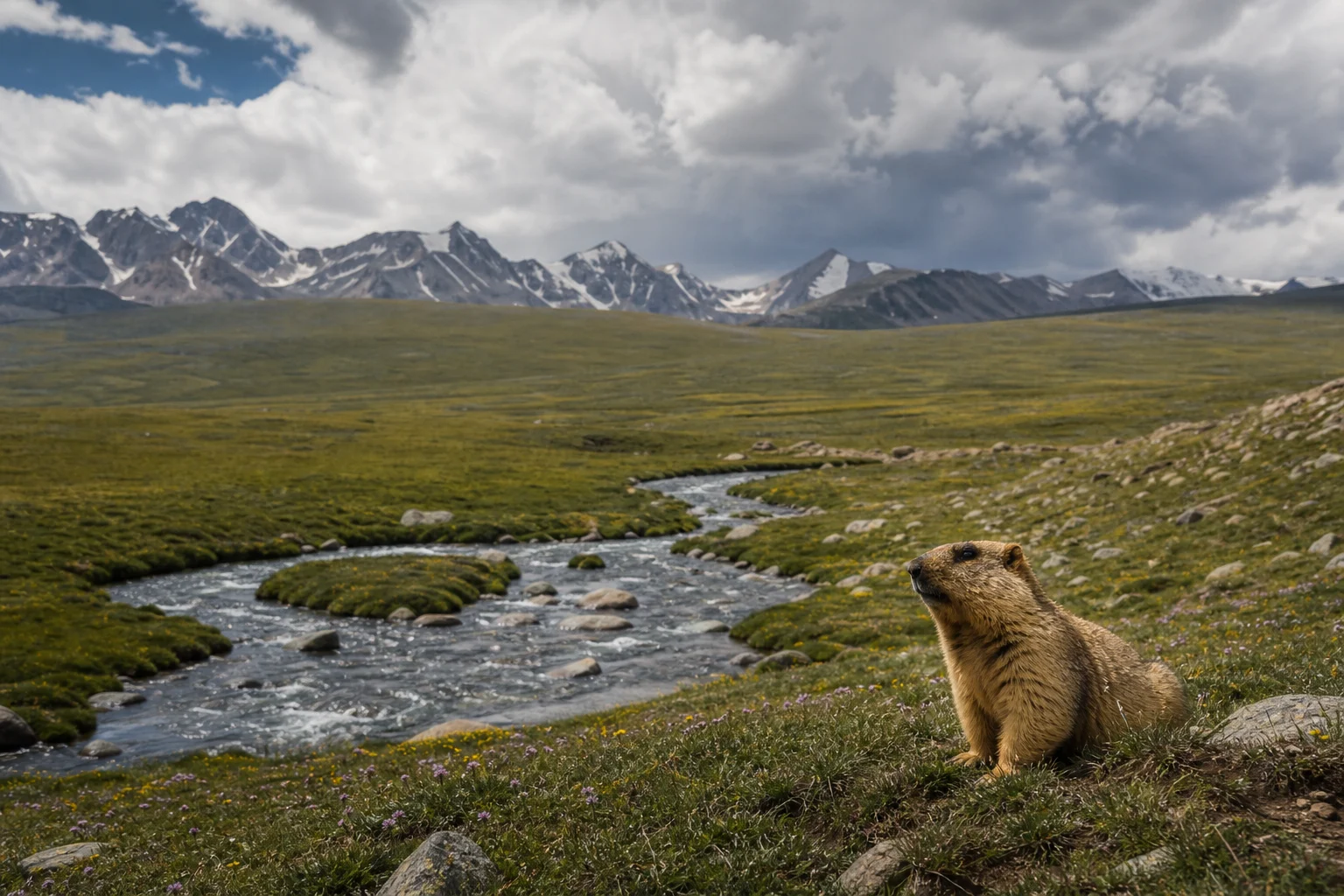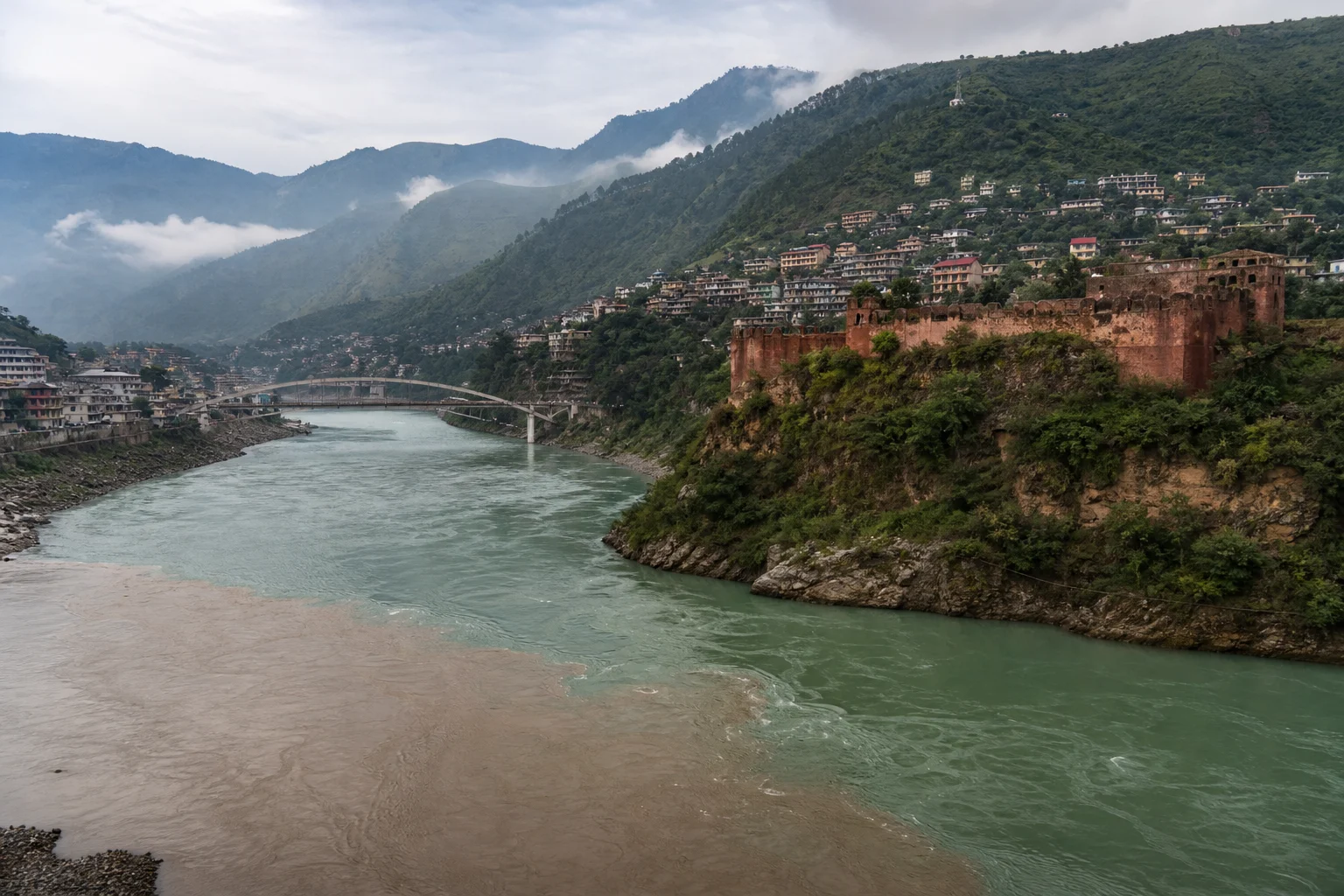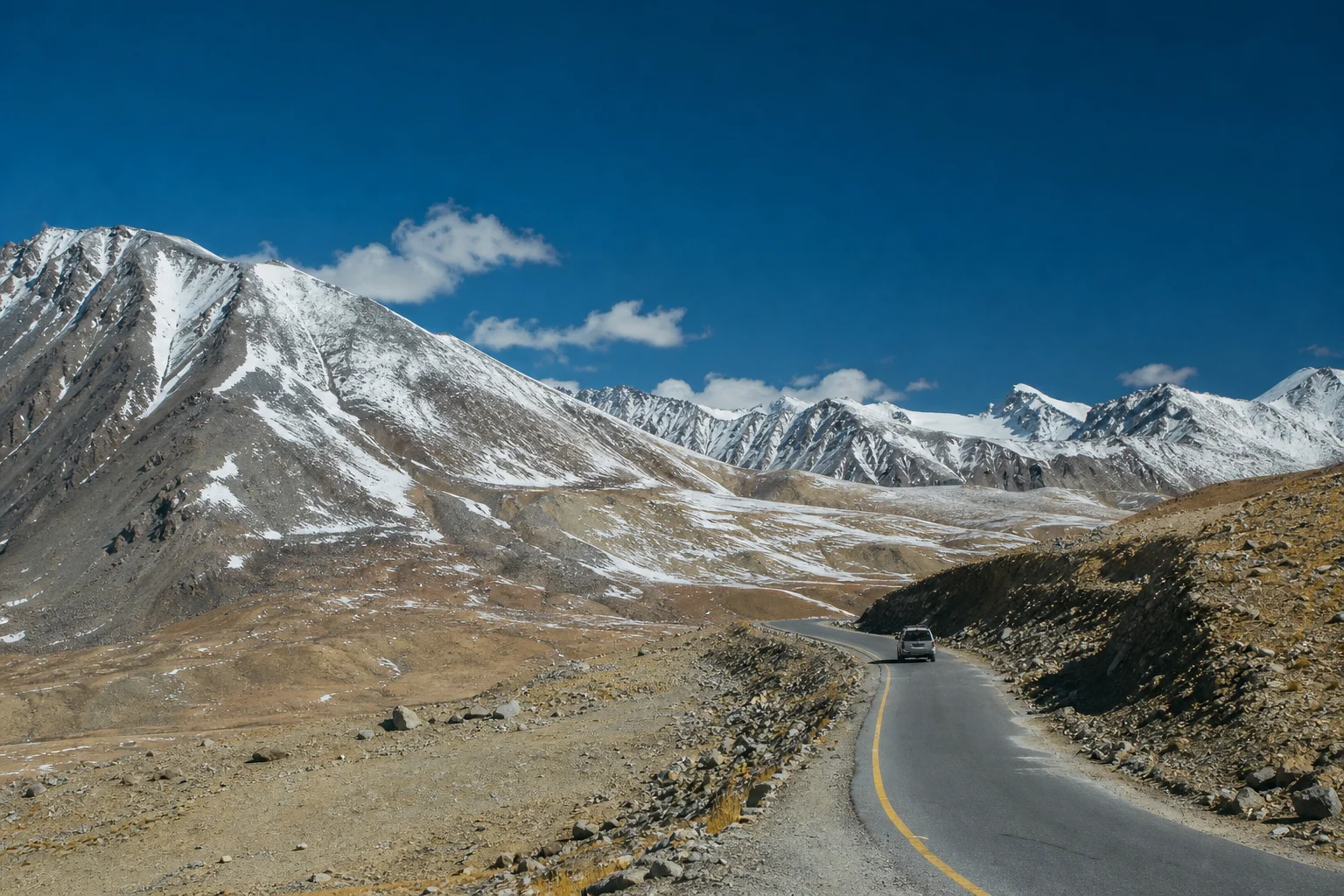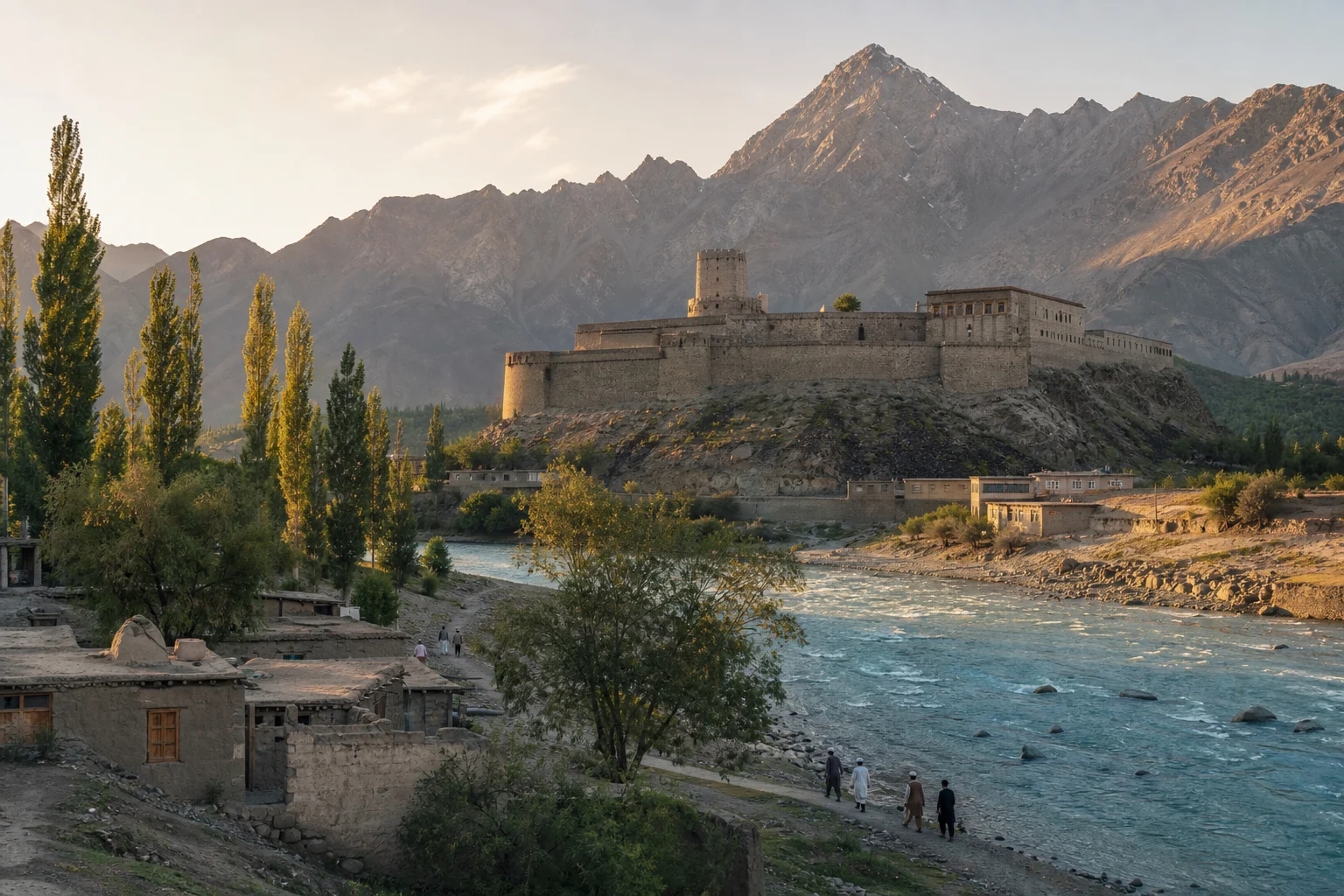
Chitral does not yield its character in a single view. The first impression may be of steep slopes, long rivers and the severe geometry of the Hindu Kush. Yet the real story of this northern corner of Khyber Pakhtunkhwa is more intimate: a story of villages held together by irrigation channels, families moving between fields and summer pastures, and a wealth of languages carried across valleys by song, trade and kinship.
For centuries, Chitral stood at the meeting point of routes linking mountain regions to the north, west and east. Its location brought political pressure as well as cultural exchange. Forts appeared beside the river; passes became thresholds between valleys; local rulers, known as mehtars, governed a mountain state whose centre was Chitral town. Today, the landscape still makes the older logic of the region visible. A bend in the river, a bridge, a shelf of cultivable land or a narrow gorge can explain why one settlement flourished and another remained small.
To travel here thoughtfully is to look beyond the grand panorama. The mountains are extraordinary, but Chitral is above all a lived cultural landscape.
A fort above the river
Chitral Fort stands on raised ground beside the Chitral River, its position chosen as much for command as for display. Associated with the former ruling house of Chitral, the fort was both a seat of authority and a place from which the valley could be watched. Its history is inseparable from the Kator dynasty, which shaped the political life of Chitral for generations, and from the turbulent events of 1895, when the fort became the focus of a widely reported siege.
It is tempting to read a mountain fort as a solitary relic of warfare. In Chitral, it is better understood as part of an older civic world. A fortified residence required guards, messengers, craftsmen, storekeepers, religious institutions and a network of villages that supplied grain, animals and labour. The fort’s riverbank setting also reminds visitors that water was never merely scenery. Rivers connected settlements, powered mills, sustained fields and, in moments of danger, defined the routes through the valley.
Other historic strongholds, including those associated with Mastuj and Drosh, suggest how authority once extended along distant valley corridors. Their physical condition, access and ownership can vary, so they should not be assumed to be open visitor sites. Even when seen from a road or village edge, however, they offer a useful lesson: Chitral’s history was distributed across a landscape, rather than contained in one capital.
In Chitral town, the fort is best approached with restraint. It remains a place of local significance, not a theatrical backdrop. Visitors should ask before photographing people, avoid treating private or restricted spaces as attractions, and allow time for the nearby museum and town streets to provide their own context. A fort becomes more meaningful when read alongside the everyday valley around it.
More than one Chitral
The word “Chitral” can make the region sound singular. It is not. Its valleys contain a striking linguistic and cultural diversity, shaped by terrain as much as by history. Khowar is widely spoken and serves as a shared language across much of the region, while other communities sustain languages including Kalasha, Wakhi, Yidgha, Palula, Gawarbati and Dameli. Urdu and Pashto are also heard in many settings. This is not a museum of isolated tongues; it is a working multilingual world in which people negotiate markets, schools, family ties and travel across different speech communities.
Language gives Chitral much of its texture. It lives in greetings exchanged at a roadside shop, in a poem performed at a gathering, in stories remembered by elders, and in the particular names used for fields, streams and grazing grounds. Khowar folklore, poetry and music remain important ways through which memory travels between generations. Informal community sittings, often described as spaces for conversation and shared listening, have historically helped sustain knowledge that does not sit easily in official records.
The Kalasha valleys of Bumburet, Rumbur and Birir form one distinctive part of the wider Chitral landscape, with their own belief system, festivals, architecture and seasonal knowledge. They deserve attention on their own terms, not as an exotic detour from “ordinary” Chitral. Elsewhere, Wakhi-speaking communities in the upper valleys and many smaller language communities contribute to an equally layered regional identity. The point is not to compress these differences into a colourful catalogue. It is to recognise that Chitral’s coherence comes partly from its ability to hold many local worlds together.
Festival as a seasonal language
In mountain regions, festivals are often timed to the agricultural and pastoral year. They arrive when a pass opens, winter loosens its hold, animals move towards higher grazing or neighbours have a brief interval to gather before the next season’s work. Chitral’s public celebrations should therefore be seen not only as entertainment, but as expressions of rhythm: the rhythm of weather, mobility and collective labour.
Qaqlasht, a broad upland meadow near the upper reaches of the valley, is associated with a spring festival that brings people together for traditional sports, music and communal recreation. When the plateau greens after winter, its open ground becomes an arena for contests and reunions. The atmosphere is festive, but the setting matters just as much. This is pastureland, and its temporary transformation into a gathering place reflects a long mountain habit of making social life out of seasonal opportunity.
Then there is polo. In Chitral, the game carries a deep social presence, from local grounds to the celebrated high-altitude setting of Shandur Pass. Played with speed, endurance and fierce concentration, polo gathers teams and supporters around skills that depend on horsemanship, local pride and long practice. The better way to watch is not to chase a dramatic image of riders against snow peaks, but to notice the crowd: families, musicians, vendors, visiting teams and people who understand every shift in the match.
Spring observances also include Nowruz in communities for whom the new year holds religious and cultural significance. Across Chitral, weddings, harvest occasions, village tournaments and musical evenings create other moments of assembly. Not every celebration is designed for visitors, and not every ceremony should be photographed. A considerate traveller follows local guidance, accepts that some gatherings have boundaries, and understands that a festival is first a community’s occasion.
Music, memory and the mountain ear
Chitral’s music is often encountered in fragments: a melody from a shopfront speaker, a performance at a wedding, a drumbeat carrying over a crowd, or the bright, resonant sound of the Chitrali sitar. But music here belongs to a larger culture of poetry, narrative and gathering. Khowar verse has long provided a language for affection, longing, landscape and humour. Its performance is not separate from social life; it is woven into it.
For visitors, the important distinction is between listening and consuming. A performance may be public, but it is not necessarily an invitation to interrupt, crowd musicians or turn every moment into content. If invited to sit, listen closely. If offered tea, accept the hospitality without making it a transaction. The strongest travel memories in Chitral often come from this quieter attention: the way conversation moves between languages, the way a song can hold a room, the way a familiar tune prompts a shared response.
Village economies of care
Chitral’s mountain communities have developed practical systems for living with short growing seasons and difficult terrain. Fields are carefully watered, fruit trees are tended near homes, livestock remains central to many households, and high pastures are part of a wider seasonal economy. Traditional knowledge of water, weather and routes is not abstract heritage. It is embedded in decisions made every day.
That knowledge is under pressure from changing climates, natural hazards, new aspirations and the out-migration of young people. It would be wrong, however, to imagine Chitral as a place frozen in the past. Villages are adapting through education, small enterprises, craft work, community initiatives and new forms of communication. Women’s skills in textiles, food and household-based production are part of this evolving economy, though visitors should resist reducing women’s work to souvenirs. Buy directly where possible, ask about the maker and value workmanship rather than bargaining it down.
The enduring lesson is one of interdependence. In a demanding environment, hospitality has practical roots. So do cooperation, reciprocity and respect for local knowledge. A visitor who arrives with patience is more likely to encounter the real Chitral: not a remote spectacle, but a network of communities accustomed to making continuity from distance.
How to visit with care
Chitral rewards unhurried travel. Build flexibility into any journey, particularly when roads, passes and weather may change plans. Check local conditions before setting out, use local drivers or guides where their knowledge is useful, and do not pressure anyone to continue in poor weather. In high places, caution is a courtesy to the people who may have to help if something goes wrong.
- Ask before photographing. This is especially important around homes, shrines, ceremonies, women, children and culturally sensitive sites.
- Dress with modesty and awareness. Practical layers suit the climate, while respectful clothing helps visitors move comfortably through village settings.
- Support local businesses. Choose locally run stays, guides, cafés and crafts when possible, and treat every purchase as an exchange with a person rather than a bargain to win.
- Leave mountain landscapes lighter. Carry back litter, avoid single-use plastics where possible, stay on established paths and do not disturb grazing animals or water channels.
- Let communities set the terms. A closed door, a request not to film or a quiet religious moment should be met with thanks, not argument.
Chitral’s forts, festivals and communities are not separate attractions. They are chapters of the same mountain story. The fort speaks of authority and vulnerability; the festival of seasonal belonging; the many languages of routes, memories and neighbours. To understand Chitral is to see how all three remain present in the valley: stone beside river, music across meadow, and everyday life continuing beneath the Hindu Kush.