Pakistan is often introduced through a short, tempting roll call: biryani, kebab, karahi, nihari, halwa puri. The dishes are real, beloved and widely shared. Yet they are only a beginning. To eat across Pakistan is to encounter a country whose food changes with altitude, rainfall, crops, pastoral traditions, migration and the particular habits of a household. A meal may be centred on meat cooked over charcoal, but it may just as easily be built around lentils, greens, rice, seasonal vegetables, flatbread and a bowl of cooling yoghurt.
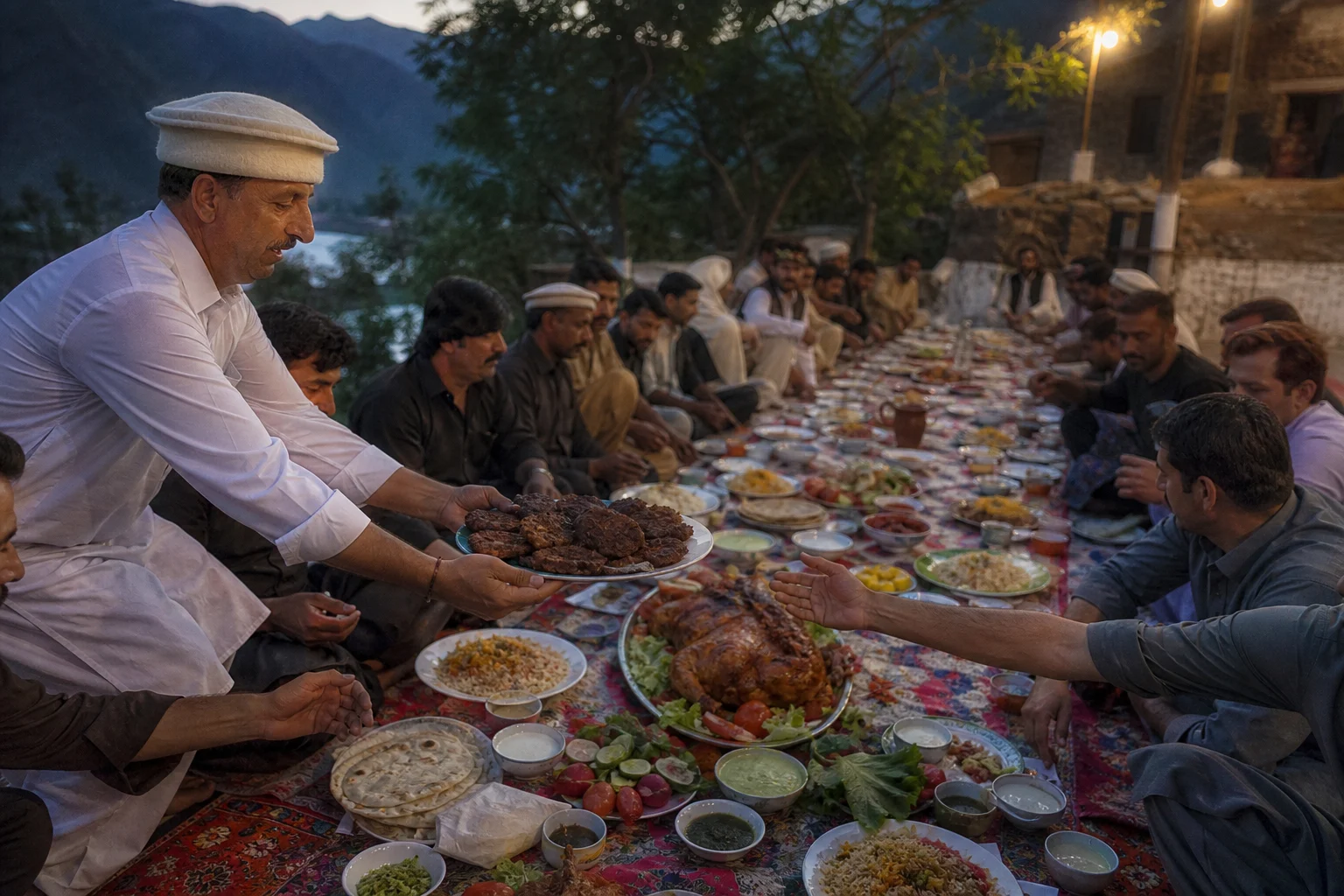
There is no single Pakistani cuisine in the narrow sense. There are regional cuisines, family repertoires and city traditions that meet at the same table. Recipes travel readily: a dish rooted in Peshawar or Quetta can become a familiar favourite in Karachi, Lahore or Islamabad, sometimes transformed by a different fuel, a different cut of meat or a heavier hand with spice. What remains constant is the social grammar of eating: food arrives to be shared, bread is torn rather than portioned, and hospitality is expressed through abundance, attention and the gentle insistence that a guest take another helping.
A country shaped by many kitchens
Pakistan’s culinary map follows its physical one. In the irrigated plains of Punjab and Sindh, wheat, rice, sugarcane, dairy and vegetables have long supported substantial everyday cooking. In the drier west, pastoral foodways give particular prominence to meat, bread and restrained seasoning. In the north, short growing seasons and mountain agriculture have encouraged practical dishes of grains, beans, dairy, dried fruit and preserved foods. Along the Arabian Sea, fish and shellfish add another register entirely.
This geography meets a long history of exchange. The food of present-day Pakistan bears relationships with wider South Asian, Persian, Central Asian and Afghan culinary worlds. Some elaborate courtly dishes developed through the refined traditions of the subcontinent’s urban centres; many other foods belong to older rural and pastoral habits that were never designed for display. It is misleading to give every rich gravy a single royal ancestry, or to treat every grilled dish as a relic of empire. Pakistani food is both ceremonial and ordinary: it belongs to wedding feasts and roadside stalls, but also to the daily rhythm of dough being kneaded, onions browned and lentils simmered.
The most revealing meals are often those that do not arrive with fanfare. A simple dal tempered with garlic and cumin, a seasonal sabzi, a coarse village bread, pickles and yoghurt can convey as much about place as an elaborate banquet. The distinction matters. Pakistan’s food culture is not only a catalogue of celebratory meat dishes; it is also a record of thrift, seasonality and the skill of making a deeply satisfying meal from a small number of ingredients.
Peshawar and the crisp edge of chapli kebab
In Khyber Pakhtunkhwa, the chapli kebab is one of Pakistan’s most recognisable regional foods. Associated especially with Pashtun cooking and the streets of Peshawar, it is a broad, flattened patty of minced meat, traditionally beef in many local versions. Its character comes from texture as much as seasoning: the kebab is pressed thin enough to develop a dark, crisp exterior while remaining juicy within.
Recipes vary from cook to cook, but chopped onion, coriander, green chilli, aromatic spices and tangy ingredients such as pomegranate seeds are familiar notes. Tomato slices are often set into the surface as the kebab fries. Served with naan, salad and chutney, it is food with a directness that rewards fresh cooking and an appetite unafraid of richness.
Its apparent simplicity is deceptive. A good chapli kebab depends on the balance of fat and meat, the coarseness of the mince, the heat of the cooking fat and the confidence to leave the patty alone long enough for a proper crust to form. It represents an important truth about Pakistani cooking: a short ingredient list does not mean an uncomplicated craft.
The northwest also offers dishes whose flavours are comparatively spare but resonant: meat cooked with salt and its own juices, rice pilafs enriched by stock, and breads made to accompany a communal meal. The food often asks the diner to notice the quality of the meat, smoke and heat rather than search for a crowded spice profile.
Punjab: bread, hearth and the pleasure of plenty
Punjab’s fertile plains are central to the country’s wheat culture. Here, roti is not an accessory but a daily anchor, whether cooked on a griddle at home or baked against the inner wall of a tandoor. The range is broad: soft wheat rotis, butter-brushed naan, layered parathas and robust breads made for scooping up curries. Their presence explains why Pakistani meals are often organised around shared dishes in the centre and bread passed from hand to hand.
Punjab is also celebrated for cooking that is generous in scale and mood. Slow-cooked meat stews, chickpea curries, grilled meats and dairy-rich desserts appear at family gatherings and festive meals. In cooler months, sarson ka saag, made from mustard greens and often other leafy greens, is traditionally paired with makki ki roti, a corn flatbread. It is a dish of the winter field rather than the restaurant menu alone, its flavour rounded by ghee, butter or yoghurt according to household preference.
Lahore’s food culture has helped make many dishes nationally famous, from breakfast spreads of halwa, chickpeas and fried bread to late-night grills and slow-simmered stews. But Punjab should not be reduced to spectacle. Its home cooking also includes lentils, okra, gourds, turnips, potatoes and carefully made pickles: foods that follow the agricultural calendar and make a complete meal with roti.
Sindh and Karachi: rice, river, coast and migration
In Sindh, rice has an especially important presence, appearing in fragrant celebratory dishes as well as in humbler combinations with lentils, vegetables and yoghurt. Sindhi biryani, now cooked far beyond the province, is known for its assertive seasoning, layered rice and meat or potatoes. Like all biryanis, it is best understood not as a fixed formula but as a family of dishes: the method of layering, the degree of heat, the use of sourness and the preferred accompaniments can all shift from one kitchen to another.
Everyday Sindhi food broadens the picture. Sai bhaji, a nourishing preparation of greens and lentils, speaks to the value placed on vegetables and pulses. Fish holds its own place in riverine and coastal communities, where the catch may be grilled, fried or cooked in a spiced gravy. The combination of rice, lentils, vegetables, fish and tangy condiments makes Sindh’s table both varied and quietly balanced.
Karachi, Pakistan’s largest port city, has become a kitchen of kitchens. Communities arriving from different regions of Pakistan and from across South Asia have brought their own methods, turning the city into a place where biryani, bun kebab, grilled seafood, kebabs, curries and sweets coexist within a few streets. Its food cannot be claimed by one origin story. Rather, it shows how migration turns memory into everyday commerce: a family recipe becomes a small restaurant speciality; a snack becomes a citywide habit.
The measured fire of Balochistan’s sajji
If chapli kebab is defined by a hot, quick sear, sajji is defined by patience. This celebrated Balochi dish is traditionally made with whole lamb or chicken roasted on a skewer over coals. The seasoning in classic versions can be remarkably restrained, often relying chiefly on salt, allowing smoke, rendered fat and the flavour of the meat to lead. Some preparations use green papaya as a tenderiser, while the bird or lamb may be stuffed with rice.
Sajji is commonly served with breads such as kaak, rot or naan. The bread is not incidental: it catches the juices and turns the meal into something to be eaten collectively, often with hands. Modern urban versions across Pakistan may use chicken and more elaborate marinades, but the enduring appeal of sajji lies in its elemental method. Fire, time, meat and bread do most of the work.
To call Balochi food minimal would be true only in the sense of seasoning. Its flavours are not minimal at all. They are concentrated, shaped by roasting, by the careful management of fat and by the social significance of serving a large shared dish. In this cooking, restraint is not absence; it is a form of confidence.
The northern mountains: grains, apricots and practical abundance
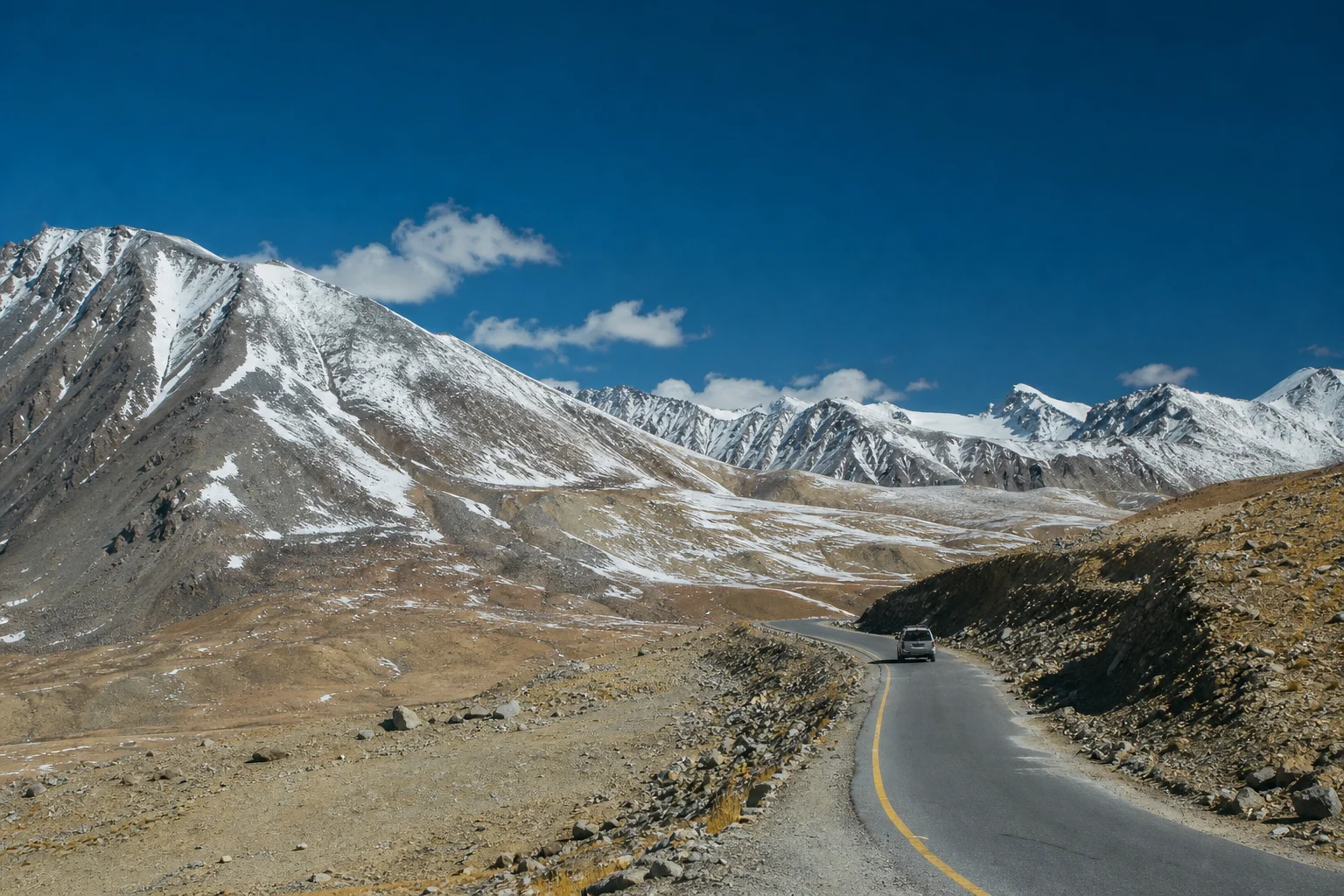
In Gilgit-Baltistan and the northern highlands, food reflects mountain terrain and a historically careful relationship with supplies. Wheat, barley, buckwheat, beans, dairy and apricots have all been important ingredients, while dried fruit and preserved foods help extend the season. Meals are shaped as much by nourishment and storage as by ceremony.
Filled breads and dumpling-like dishes, soups, grains and simple meat preparations are part of a diverse northern repertoire that differs from valley to valley. In Balti cooking, for example, dishes may make use of noodles, dough and richly sustaining broths, while local breads provide the durable centre of a meal. Apricots appear fresh, dried, stewed or pressed for oil, lending brightness to an environment where every crop is hard won.
The point is not to romanticise mountain food as austere. These cuisines contain warmth, ingenuity and deep pleasure. They show another Pakistan: one where the measure of a dish may be its ability to sustain a family through winter, honour guests with the best preserved fruit, or make flour, water and heat into something memorable.
More than spice: the table as a social art
Pakistan’s food is frequently described as “spicy”, a word too blunt for what is happening. Spices may provide heat, but they also bring fragrance, bitterness, sweetness, colour and depth. Cumin can be earthy, coriander citrusy, black pepper warm, cardamom floral and dried fenugreek faintly bitter. Ginger, garlic, mint, fresh coriander, green chillies, yoghurt, tamarind, lemon and pomegranate can be just as decisive as any dried masala.
Equally important are the contrasts built into a meal: hot kebab with cool raita; rich curry with sharp pickle; soft rice with crisp fried onions; sweet vermicelli after savoury rice and meat. Chutneys are not decorative extras but balancing acts. A bowl of yoghurt can soften heat, while a squeeze of lemon can awaken a charcoal-roasted dish.
For travellers, the most respectful way to approach this abundance is with curiosity rather than a checklist. Ask what a dish is called locally, whether it is seasonal, and how it is usually eaten. Eat with the right hand when sharing a traditional meal, follow the lead of hosts, and remember that an offer of food is often an expression of welcome rather than a demand for performance. At markets and roadside stalls, choose places where food is being freshly prepared and where locals are eating, while remaining attentive to personal dietary needs and current local conditions.
A journey that continues at the table
From the crackling surface of a chapli kebab to the slow, smoky tenderness of sajji, Pakistan’s food resists simplification. It can be fiery, but it can also be delicate. It can be lavish, but it knows the discipline of lentils and bread. It carries the memory of migration and trade, yet remains rooted in fields, rivers, grazing lands and household kitchens.
That is why the most meaningful culinary journey across Pakistan is not a hunt for one definitive dish. It is an education in difference: a recognition that every region has its own measures of comfort, celebration and care. Sit at enough tables, and the country reveals itself not as a single flavour but as a generous, evolving conversation.