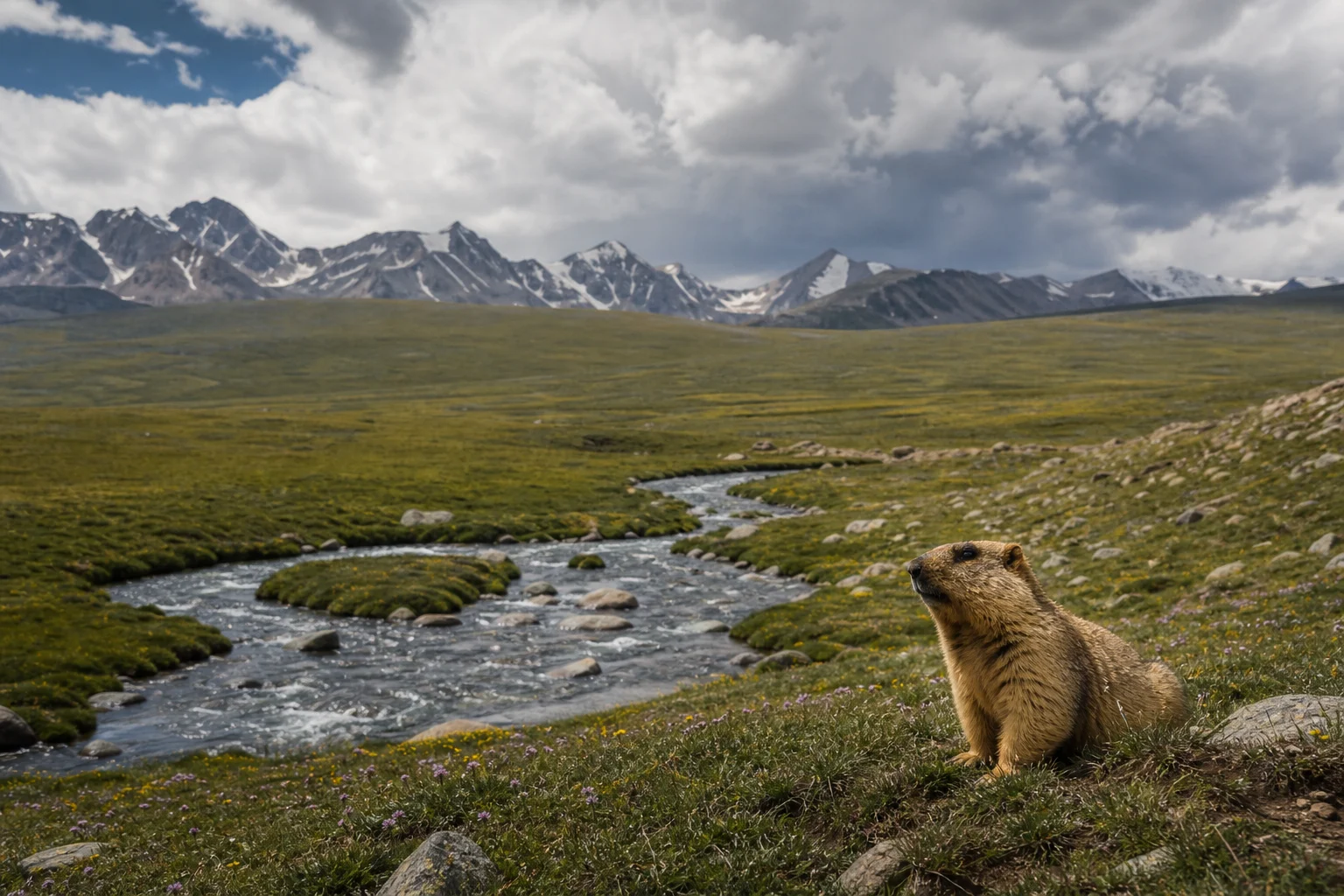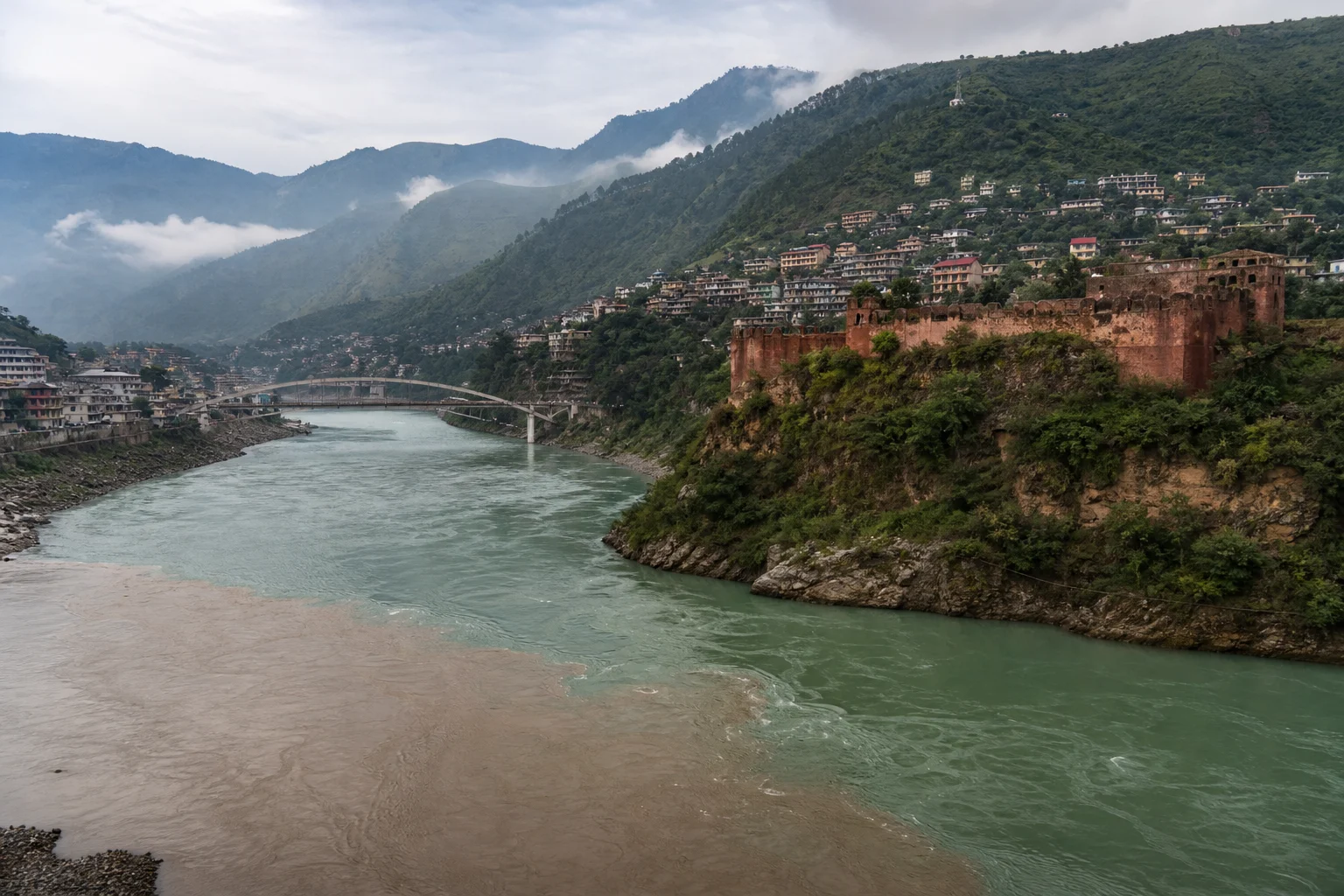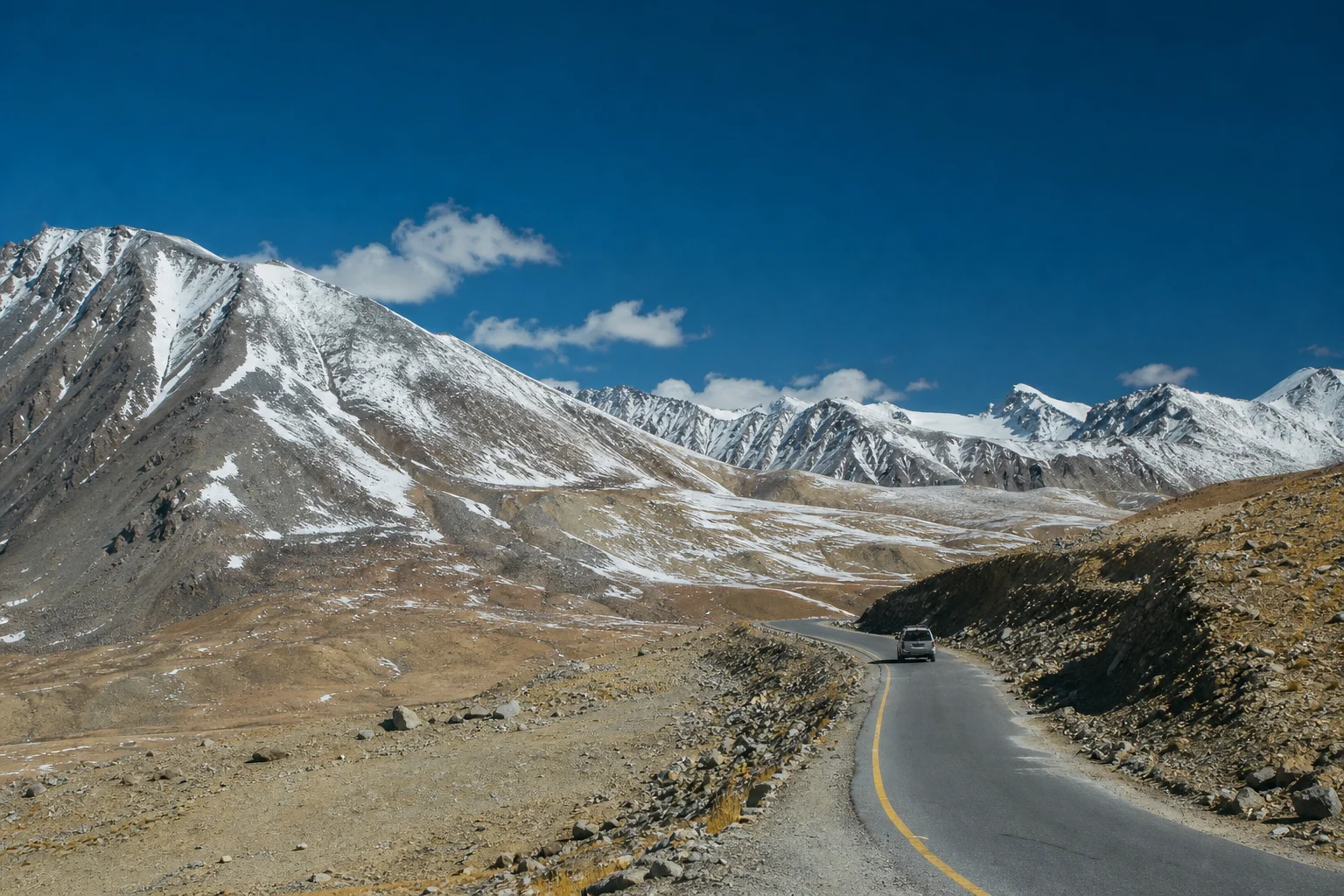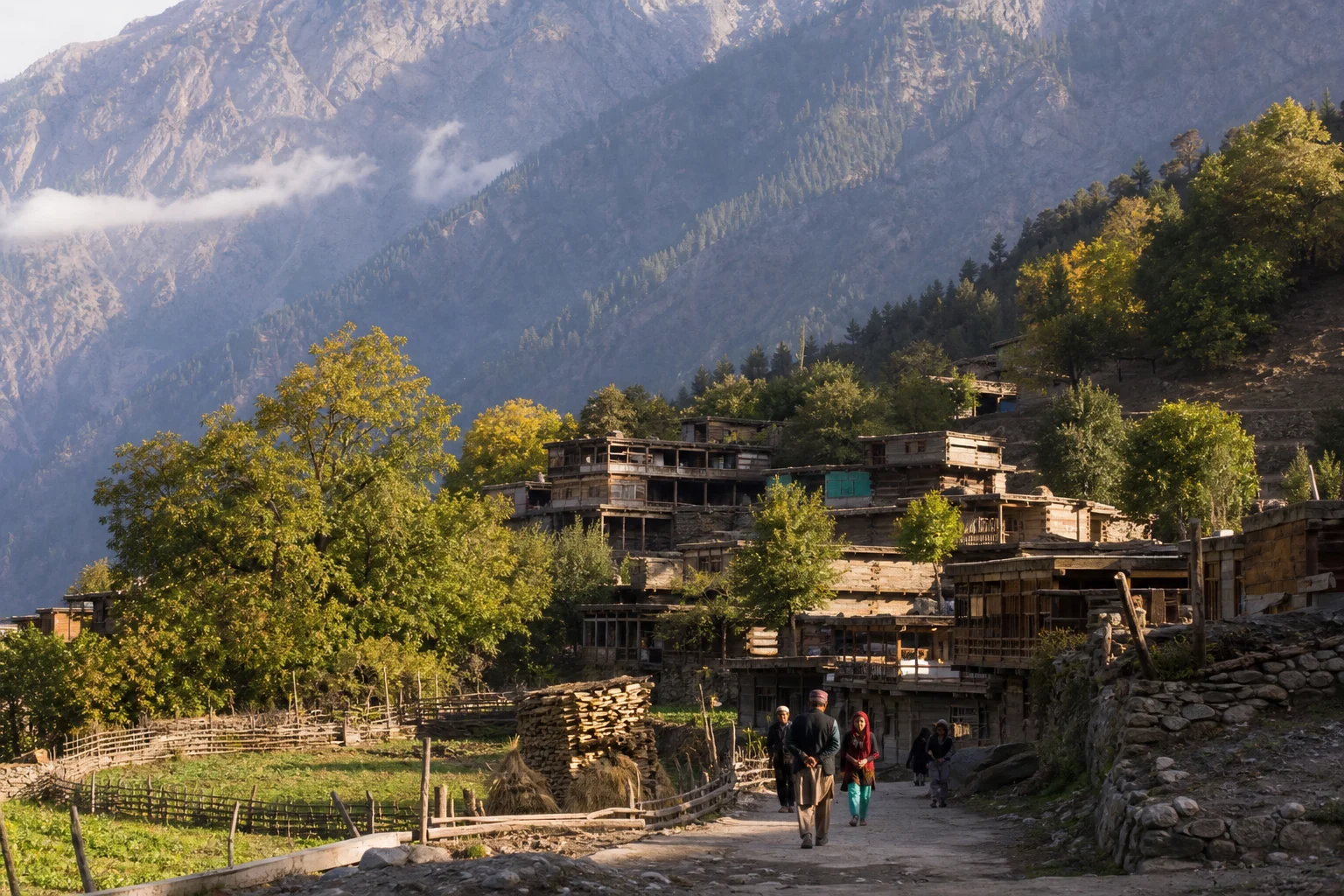
At the far north-west of Pakistan, where the Hindu Kush narrows into steep valleys and fast water, three tributary valleys open from the wider Chitral region: Bumburet, Rumbur and Birir. Together they are widely known as the Kalash Valleys, homeland of the Kalasha, one of Pakistan’s most distinctive indigenous communities.
Visitors often arrive with a shorthand image already formed: embroidered dresses, dark woollen headpieces, dances and seasonal festivals against wooded mountains. These are real and meaningful parts of Kalasha life, but they are not the whole story. The valleys are not a costume display, nor a relic preserved outside time. They are inhabited cultural landscapes, shaped by households, fields, forests, animals, kinship, ceremony, language and an intimate knowledge of mountain weather.
To understand the Kalash Valleys is to begin with this relationship between culture and place. The slopes, streams and seasonal pastures are not merely dramatic scenery around a community. They are part of the community’s working world and moral geography.
Three Valleys, One Cultural Landscape
Bumburet is the broadest and most visited of the three valleys. Rumbur and Birir feel narrower and, in places, more secluded. All lie in Chitral, in Khyber Pakhtunkhwa, where settlements are arranged along valley floors and lower slopes beneath high ridges. Houses, paths, cultivated plots and communal spaces make a dense human pattern within an imposing mountain environment.
The Kalasha have long adapted their lives to this terrain. Water channels support cultivation; forests supply essential materials; grazing grounds are used seasonally; and the agricultural year governs the rhythm of work and celebration. Grain, fruit, walnuts, livestock and dairy products belong to an economy in which winter preparation remains a serious practical task, not a picturesque custom.
This is why the valleys are best understood as a cultural landscape rather than a cluster of scenic destinations. Built places and living practices are inseparable. Wooden structures, ceremonial sites, graveyards, household spaces, paths to fields and the high pastures beyond the villages all acquire meaning through use, memory and inherited responsibility.
Such continuity should not be mistaken for isolation. The Kalasha have lived for generations in contact with the wider Chitral region and its languages, markets and communities. Their cultural distinctiveness has endured not because the valleys have been sealed off from the world, but because families and community institutions have continued to transmit particular ways of speaking, celebrating, remembering and relating to place.
A People Beyond the Myths
The Kalasha have frequently been described through an outsider’s fascination with supposed origins. One persistent story links them directly to the soldiers of Alexander the Great. It is a compelling travel tale, but it reduces a living people to a romantic riddle. Genetic research has not established the popular claim of straightforward descent from Alexander’s army, while the community’s own history and identity cannot be explained by one dramatic origin story.
What can be said with greater confidence is that the Kalasha are a small indigenous community of the Hindu Kush with a distinctive language, religious tradition and body of customary practice. Their language, Kalashamon, belongs to the Indo-Aryan branch of languages and has historically been sustained above all through speech: songs, stories, conversations, ritual formulas and oral instruction. A writing system introduced in recent decades has supported new efforts in literacy and documentation, but oral expression remains central to cultural transmission.
Language matters here not only as a means of communication but as a storehouse of local knowledge. It carries names for places, plants, kinship relations, customs and seasonal events. When a language with relatively few speakers loses ground, a community risks losing finely held ways of interpreting its own world. Supporting Kalashamon therefore means more than preserving vocabulary; it means making space for children and young people to inherit a living cultural vocabulary on their own terms.
Faith, Ritual and the Mountain Year
Kalasha religious life is often described as polytheistic, but this broad label can obscure its complexity. The tradition has its own sacred beings, ritual spaces, practices of purification and seasonal observances. It is rooted in an understanding that human life, animals, cultivated land, high pastures and the changing year require care, balance and ceremony.
Important festivals mark the cycle of seasons. In spring, Joshi celebrates renewal after winter and brings communities together in music, dancing and ritual observance. Uchau is associated with the autumn harvest. Chaumos, held around the winter solstice, is the most significant annual festival and marks the close of the agricultural year and the turning toward a new one. Birir also maintains particular local observances, a reminder that shared Kalasha culture is not entirely uniform from one valley to another.
It is tempting to treat these gatherings as public performances. For Kalasha families, however, festivals are occasions of devotion, social connection, remembrance and renewal. They bring together inherited songs and dance, but also obligations, preparations and rituals whose meanings are not always open to casual spectators. A respectful visitor should understand that a ceremony does not become public property because it is visually striking.
One particularly remarkable element of Kalasha knowledge is Suri Jagek, a traditional system of observing the sun, moon, stars and surrounding topography to read seasonal change. It has informed decisions connected to agriculture, animal care and the timing of social and ritual life. UNESCO placed Suri Jagek on its List of Intangible Cultural Heritage in Need of Urgent Safeguarding in 2018, recognising both its depth and its vulnerability. The designation is significant, but the knowledge itself remains meaningful only when it is practised, discussed and passed between generations in the valleys.
Dress as Memory and Craft
Kalasha women’s dress is among the most immediately recognisable visual expressions of the community. Long black garments are often richly decorated, while the distinctive headwear may be embellished with shells, beads, buttons and bright threads. These clothes have become familiar in photographs, yet their importance is greater than their surface appeal. They carry skill, labour, family taste and a visible sense of belonging.
Adornment is not frozen in an earlier century. Materials, patterns and preferences can change, as they do in every living culture. What continues is the craft knowledge involved in assembling garments and ornaments, and the social meaning attached to wearing them on ordinary days as well as important occasions.
Men’s clothing, tools, homes and agricultural equipment also belong to the material life of the valleys, though they receive less attention in commercial imagery. Museums and cultural centres in Chitral and Bumburet help place these objects in context, presenting clothing, domestic articles, musical instruments and other materials as evidence of daily life rather than decorative curiosities.
Music, Story and the Work of Remembering
In the Kalash Valleys, culture is carried as much by sound as by objects. Songs accompany festivals and social occasions; stories connect present-day families to remembered ancestors and places; and oral forms preserve humour, affection, moral instruction and shared history. Music and dance are communal arts, not simply entertainment added to a festival programme.
This oral inheritance is especially important in a small language community. A story told at home, a song learned from an elder or a local place-name spoken correctly can be an act of continuity. Cultural survival does not depend on keeping every practice unchanged. It depends on a community retaining the authority, confidence and opportunity to decide what it wishes to carry forward.
That authority is worth emphasising because the Kalasha have often been viewed through a lens of spectacle. Outsiders may seek an imagined ancient Europe, an untouched mountain people or a colourful exception to Pakistan. Each idea fails in the same way: it puts other people’s expectations before Kalasha lives. The more truthful view is both simpler and richer. The Kalasha are Pakistani citizens and mountain communities with a distinct heritage, contemporary concerns and the same right as any people to privacy, dignity and self-representation.
Heritage Under Pressure
Small communities face particular pressures. Language shift, changing livelihoods, environmental stress, limited educational resources and the commercial pressures of tourism can all affect how traditions are transmitted. Climate and extreme weather matter deeply in mountain valleys where roads, water systems, fields and forests are closely linked. At the same time, outside attention can bring useful opportunities for cultural documentation, locally led museums, education and craft work.
The most constructive preservation efforts are those that treat the Kalasha not as subjects to be saved, but as decision-makers and knowledge holders. Community-based documentation, local cultural institutions and intergenerational teaching can help keep heritage in the hands of the people who practise it. Safeguarding is strongest when it supports language, livelihoods and the ability to remain connected to ancestral land.
How to Visit with Respect
A journey to the Kalash Valleys can be memorable precisely because it asks more of a traveller than admiration. The valleys are homes. Ask before photographing people, homes, ceremonies or graveyards. Do not assume that every festival space is open for recording, and do not press for access to private rituals. Dress modestly, use locally owned services where possible, avoid leaving waste in the valleys, and listen when residents or local guides explain boundaries.
Travel conditions in the Hindu Kush can change with weather and road conditions, so plans should remain flexible and current local advice should be checked before setting out. More importantly, visitors should arrive willing to learn rather than to collect proof that they have encountered something unusual.
The Kalash Valleys offer a wider lesson about Pakistan. The country’s cultural life cannot be contained by a single language, landscape or inherited narrative. In Bumburet, Rumbur and Birir, a small community has maintained a distinctive cultural world through the everyday work of speaking, farming, making, celebrating and remembering. Its importance lies not in mystery, but in the rare and human achievement of continuity.