In Pakistan, breakfast is called nashta, a word that can suggest far more than the first meal of the day. It may be a hurried cup of chai before school or work, a paratha folded around an omelette, a neighbourly stop at a street stall, or a long family outing planned around a table already crowded with dishes. The celebrated foods are substantial, often fragrant with ghee, spice and slow cooking. Yet the everyday reality is more varied: leftover curry with roti, bread and eggs, yogurt, seasonal fruit, a bowl of lentils, or simply tea shared before everyone leaves home.
That variety matters. Pakistan’s breakfasts cannot be reduced to one national plate. Wheat-growing plains, riverine Sindh, the dry expanses of Balochistan, the foodways of Khyber Pakhtunkhwa, and the high valleys of Gilgit-Baltistan all bring their own ingredients, breads and habits to the morning. The dishes travel readily between regions and cities, but they retain traces of the places that shaped them.
The weekend theatre of halwa puri
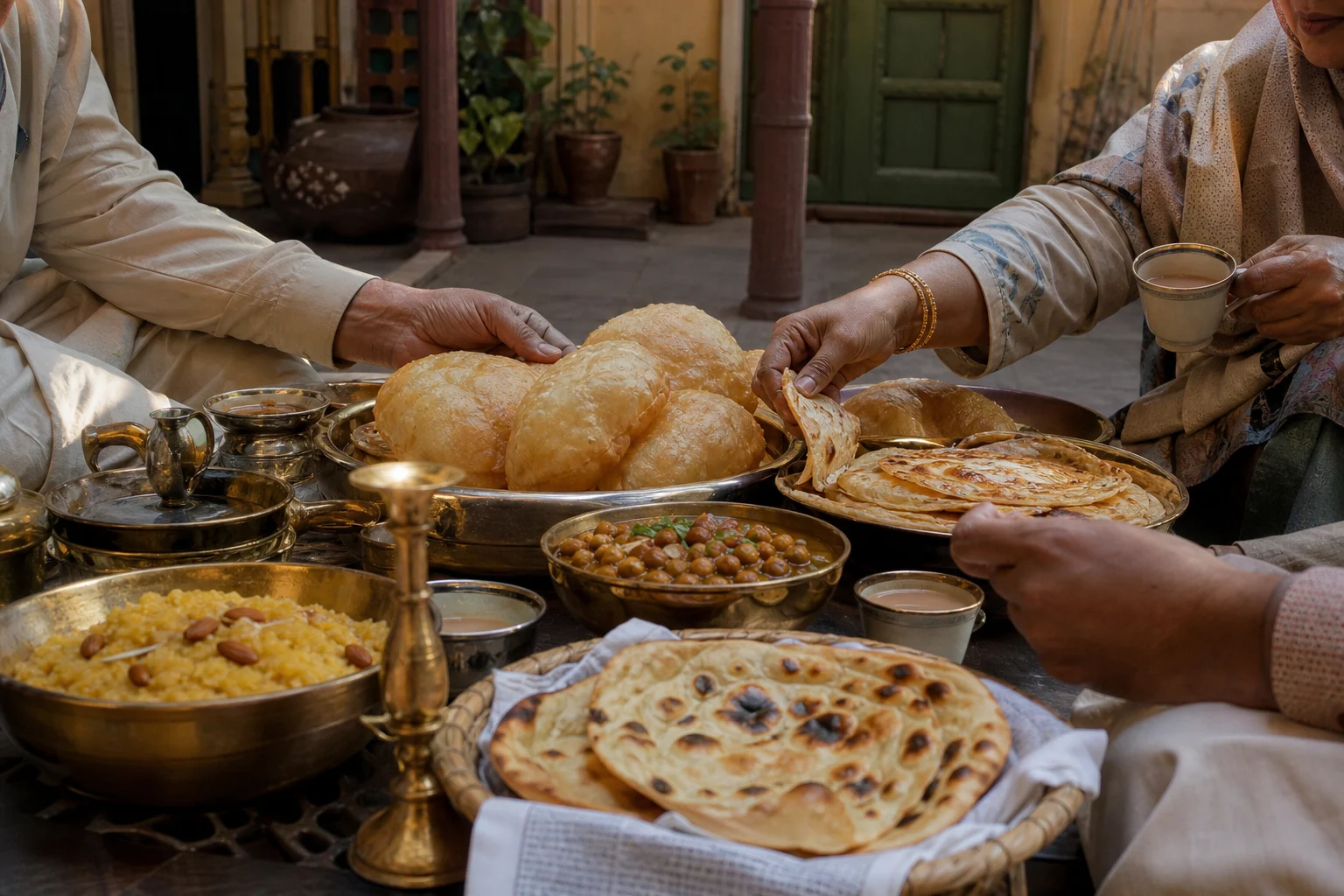
For many visitors, halwa puri is the most immediately recognisable Pakistani breakfast. Its familiar pairing is a lesson in contrast: hot, puffed puris; a sweet halwa, usually made from semolina; and savoury chana, or chickpeas, cooked into a spiced gravy. Pickle, sliced onion, potato curry and yogurt may appear alongside. The aim is not restraint. A piece of puri is torn by hand, dipped into chana, then balanced with a little halwa in the same bite.
Puri is a deep-fried bread, traditionally made from wheat flour and rolled into discs that balloon in hot oil. Its crisp exterior and soft interior make it a natural companion to wet curries. Halwa brings a different texture: soft, glossy and grainy with semolina, enriched with ghee and sweetened until it becomes a warm, spoonable counterpoint to the spices of the chickpeas.
The combination is especially associated with Punjab’s urban breakfast culture, and Lahore has long held an outsized place in the popular imagination of halwa puri. But it is enjoyed much more widely, including in Karachi, Islamabad, Rawalpindi, Peshawar and towns across the country. In many households, it belongs more to a relaxed Sunday, a holiday morning or a family gathering than to an ordinary weekday. That distinction is part of its charm: halwa puri is not only food, but an occasion.
At a busy breakfast shop, the meal is a small piece of public choreography. Puris are fried in rapid succession; ladles move from wide pots of chana and potato curry; customers stand close to the counter while tea glasses arrive in waves. The best experience is not necessarily about finding the most extravagant plate. It is about eating while the puri is still hot, understanding that sweetness and savouriness are meant to share the table, and allowing the breakfast to unfold at its own generous pace.
Chana: the steady centre of the table
Chana appears in many forms across Pakistan, but breakfast chana has a special practicality. Chickpeas are affordable, filling and receptive to regional seasoning. Some versions are dark and deeply spiced; others are lighter, with potatoes softening the gravy. In some kitchens, the chana is dry enough to cling to bread. In others, it is soupy enough to soak into naan or puri.
The bread changes the character of the meal. With puri, chana becomes part of the festive halwa puri trio. With fresh naan, it becomes a sturdy bazaar breakfast, often called naan chana or chana naan. With a simple roti, it belongs easily to the domestic table. The dish also demonstrates a broader truth about Pakistani food: a few basic elements—legumes, wheat, onions, chillies, oil and warming spices—can be arranged differently according to household preference, season and local habit.
Chana carries a social flexibility as well. It is suitable for a large shared breakfast, easy to serve from a communal pot, and welcoming to people who do not eat meat. That does not make it a minor dish. In a country where meat-rich breakfasts receive much attention, a well-made chana can be the meal people remember: earthy, bright with ginger or coriander, and inseparable from fresh bread.
Paratha, the bread of the home kitchen
If halwa puri is public celebration, paratha is often the language of home. A paratha is a layered flatbread cooked on a tawa, or griddle, with oil, butter or ghee. Its defining pleasure lies in the folds: dough is rolled, spread with fat, folded and rolled again so that the finished bread develops flaky layers and browned patches.
The plain paratha is only the beginning. It may be stuffed with potato, radish, cauliflower, minced meat or leftover spiced vegetables. It may be served with an omelette, fried egg, yogurt, pickle, chutney or last night’s curry. In rural settings as well as crowded cities, it has long made sense as a breakfast bread because it is portable, satisfying and made from familiar pantry staples.
Its richness should not obscure its adaptability. A lightly oiled paratha can be an ordinary weekday food; a lavishly ghee-brushed one can be a treat. Some families prefer crisp edges, others want a softer bread with pronounced layers. For children, a paratha rolled around egg or sugar may be the simplest kind of comfort. For adults, it can evoke school mornings, winter fog, grandparents at the stove, or the sound of dough striking a hot griddle.
The paratha also resists rigid ideas of what belongs at breakfast. It is a bread that moves across the day. The same dough can appear at lunch, be packed for a journey, or return at dinner beside a curry. In this sense, Pakistani mornings are shaped not by a strict breakfast category but by the useful continuity of bread, tea and whatever the household has ready to share.
Regional mornings, distinct kitchens
Punjab: abundance, dairy and the breakfast outing
In Punjab, wheat breads naturally occupy a central place. Halwa puri, chana, naan, paratha and lassi are all part of the region’s wider culinary vocabulary, though no single household eats them in the same way. In colder months, some diners seek out slow-cooked dishes such as paye or nihari early in the day, eating them with naan. These are not light breakfasts, nor are they meant to be. They belong to a tradition of food prepared patiently, often through the night, then eaten communally when the morning is still cool.
Sindh and Karachi: grain, greens and a city of arrivals
Sindhi food offers its own morning possibilities. Koki, a thick wheat flatbread enriched with ingredients such as onion, coriander, cumin or chilli, has a hearty, rustic character and can be eaten at different times of day. Dal pakwan—lentils served with crisp fried bread—also reflects the pleasure of pairing legumes with a bold, textural bread. These dishes point toward Sindh’s strong traditions of wheat, pulses, vegetables and assertive sour and spiced flavours.
Karachi complicates any neat regional category. As a great port city shaped by migration from across Pakistan and South Asia, its breakfast streets offer many culinary lineages at once: halwa puri, naan chana, paratha and egg, kebabs, tea and breads that arrive with families from elsewhere. A Karachi breakfast can therefore be deeply local without being narrowly regional. It is a city where a morning meal may tell the story of movement as much as inheritance.
Khyber Pakhtunkhwa: naan, broth and winter warmth
In Peshawar and elsewhere in Khyber Pakhtunkhwa, fresh naan is an essential companion to morning dishes. One of the best known is siri paye, a slowly cooked preparation of head meat and trotters, valued for its rich broth and eaten with bread. It is especially associated with cold-weather mornings, when its warmth and long-cooked depth make immediate sense. As with many traditional foods, preferences vary widely: some people regard it as a cherished breakfast ritual, while others reserve it for an occasional outing.
Tea here may take forms beyond the milky chai common in many Pakistani homes. Green tea, often called qahwa, is also part of the region’s hospitality culture. Its light, aromatic character provides a graceful contrast to a weighty meal of naan and broth.
Balochistan: bread made for distance and fire
Balochistan’s food traditions are shaped by arid landscapes, pastoral livelihoods and the need for foods that can travel well. Kaak, also known in some places as stone bread, is among the province’s distinctive breads. It is traditionally made around a heated stone and cooked near a fire, producing a firm, durable loaf. The technique is recognised as part of Pakistan’s intangible cultural heritage.
Kaak reminds us that breakfast need not mean an elaborate spread. A bread may be eaten simply, paired with tea, dates, dairy or whatever the household has prepared. In this setting, the morning meal speaks of resourcefulness as much as indulgence: grain transformed by heat into food that can sustain a long day.
Gilgit-Baltistan: mountain grains and preserved fruit
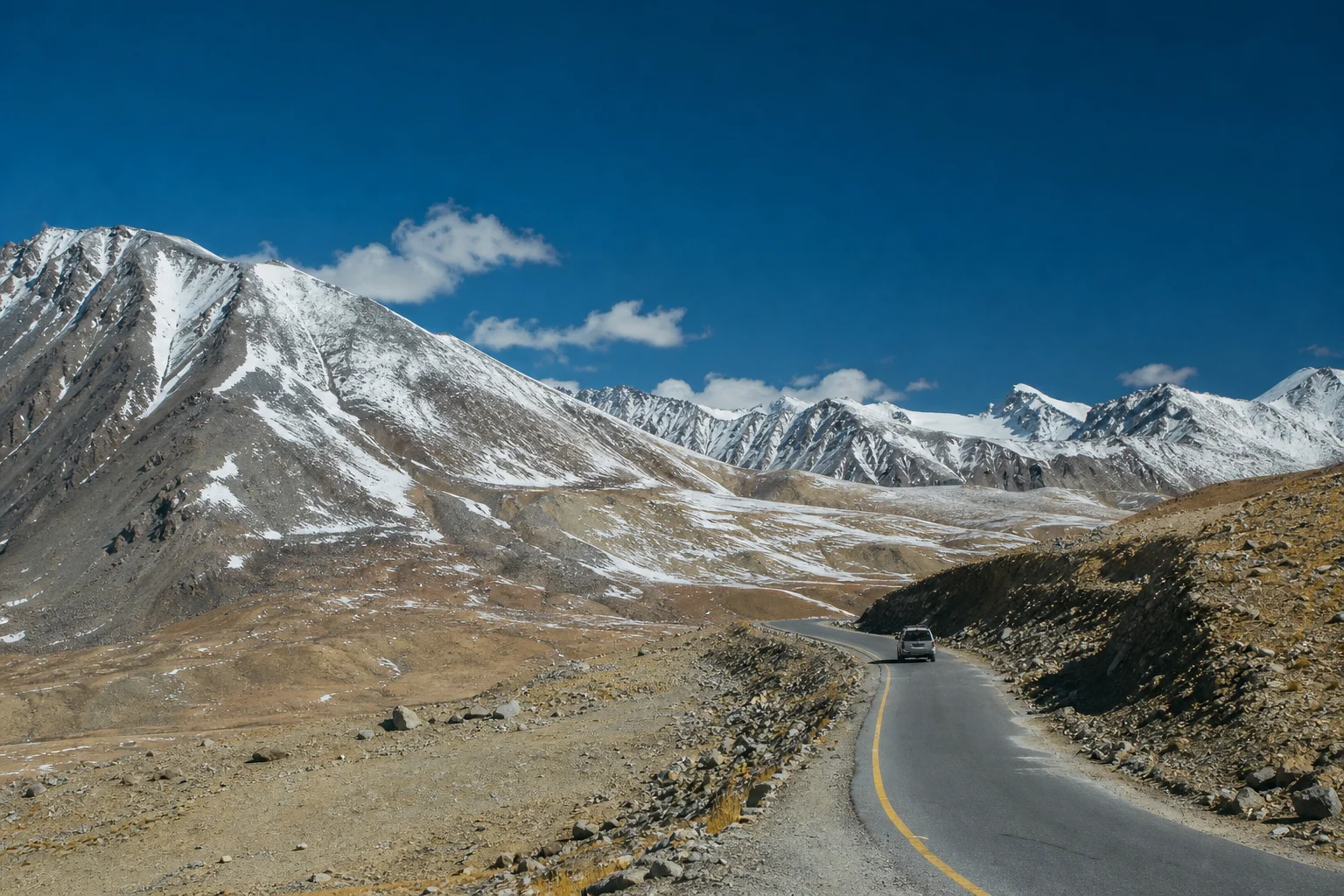
In the northern mountains, short growing seasons and high altitude have encouraged foodways built around grains, dairy, nuts and preserved fruit. The breakfasts of Gilgit-Baltistan differ from valley to valley and community to community, but foods made with buckwheat, barley, wheat and apricots are especially meaningful. Diram fitti, made with local grains, and breads or simple preparations enriched with apricot oil reflect ingredients adapted to mountain agriculture. Salted butter tea is also found in parts of the region, offering warmth and energy in colder conditions.
These are not exotic curiosities at the edge of Pakistan’s food map. They are central expressions of local knowledge: how to preserve fruit, use limited fuel wisely, draw nourishment from grain, and cook for a demanding landscape. A visitor who comes expecting only the familiar paratha-and-chai formula may discover a more diverse Pakistan in these mountain kitchens.
Chai, conversation and the pace of morning
No account of breakfast is complete without chai. Strong black tea simmered with milk and sugar is the everyday companion to countless meals and conversations. It may arrive in a glass, a cup or a small bowl, and it often continues long after breakfast itself has ended. In offices, workshops, homes and roadside stalls, chai creates a pause: a moment to speak, listen, plan or simply sit together.
That social dimension is perhaps the real subject of Pakistani breakfast. The food is memorable because it gathers people. A family may argue affectionately over who gets the crispiest paratha. Friends may meet after a morning walk for chana and naan. A traveller may be offered tea before any formal introduction has been completed. Even a modest meal can carry the ethic of hospitality that makes the table feel larger than its ingredients.
How to eat a Pakistani breakfast with attention
For travellers, the most rewarding approach is curiosity without assumption. Ask what is made in the house or neighbourhood rather than seeking a single “authentic” national breakfast. Eat halwa puri as a shared, occasional feast rather than imagining it as everyone’s daily routine. Try regional breads where they are made, and let local hosts explain the preferred accompaniments.
- Follow the local rhythm. Breakfast stalls are often busiest early, and freshly cooked bread is at its best straight from the griddle, tandoor or frying pan.
- Use your right hand when eating communally. Tear bread into manageable pieces and take food from your own portion where possible.
- Respect household choices. Some families eat meat, some do not; some use much less oil or sugar than restaurant versions; many weekday breakfasts are deliberately simple.
- Choose thoughtfully. Busy places with freshly prepared food can be a sensible starting point, but visitors should use their own dietary judgment and check current local conditions.
- Waste little. Order modestly at first, share generously, and remember that the value of the meal lies as much in company as quantity.
Pakistan’s breakfasts begin with flour, fire, tea and time. They may be sweet and savoury on one plate, rich enough for a winter morning, or plain enough to eat on the way out the door. Their deeper unity is not a standard recipe. It is the habit of making room: for family, for neighbours, for travellers and for the many regions that meet at the morning table.