The Hidden Village of Hushe Valley
Where Pakistan's road ends and the Karakoram begins — a story of mountains, isolation, survival and the people who have quietly stood behind some of the world's greatest mountaineering journeys.
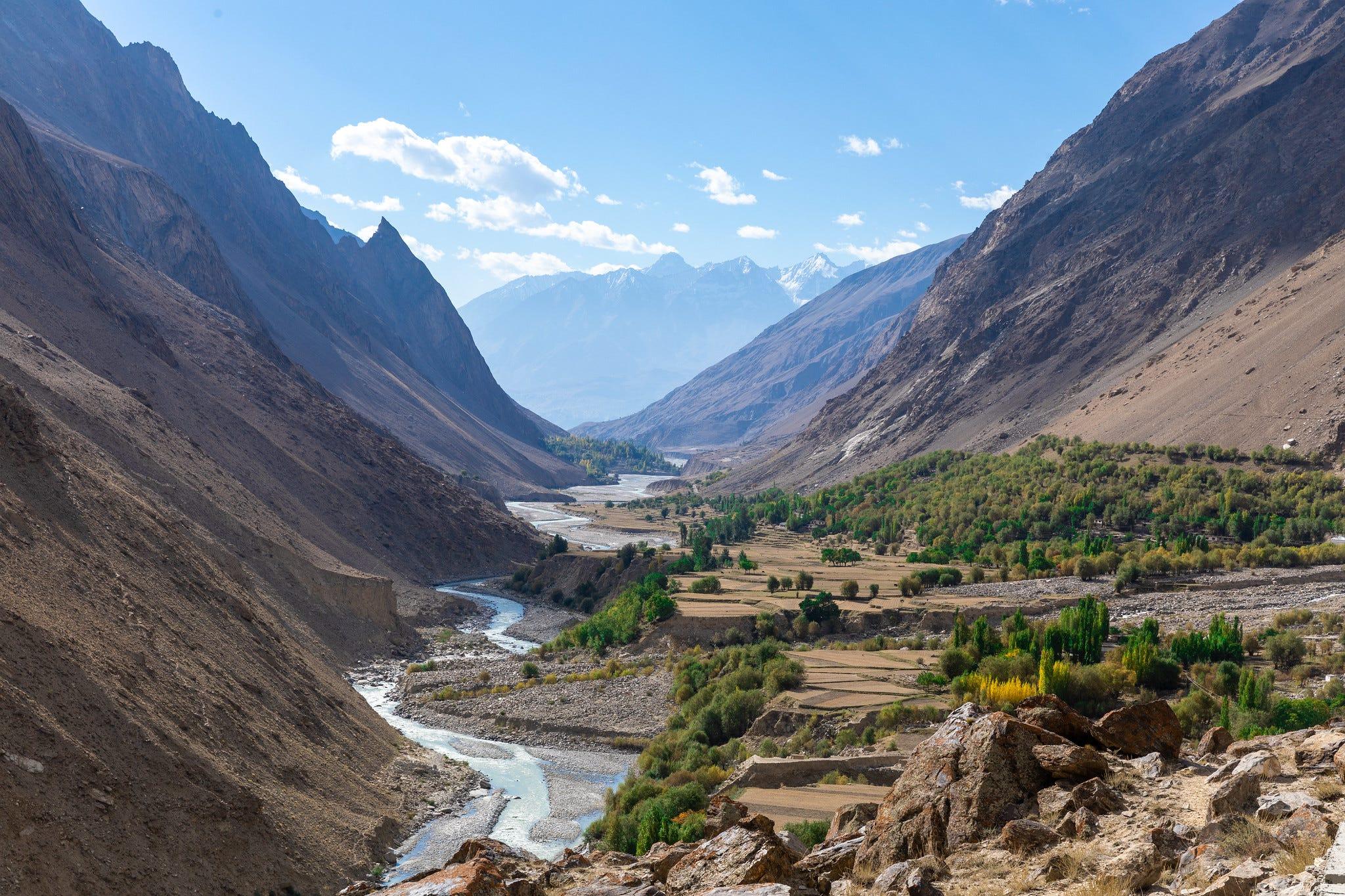
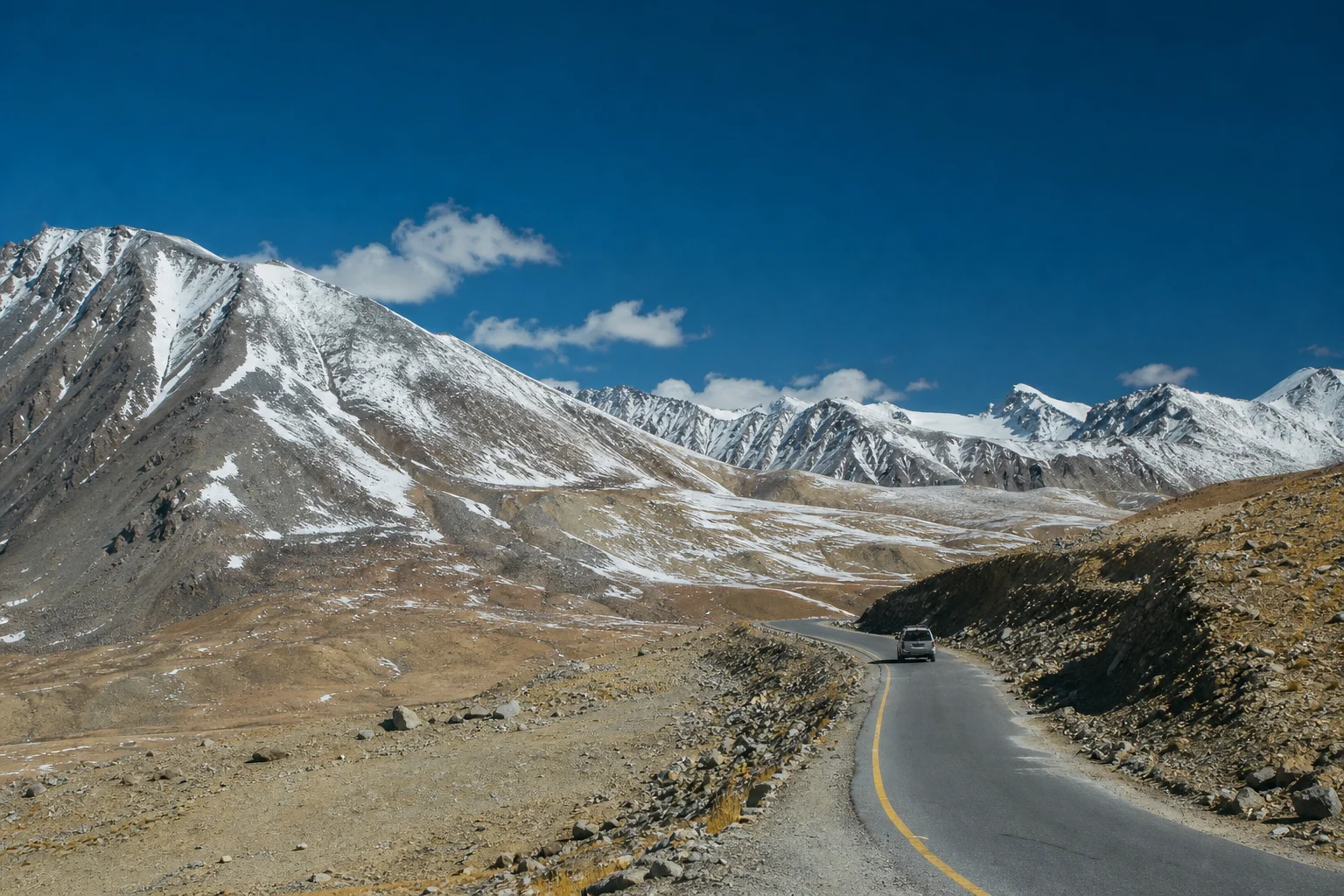
There is a point in northern Pakistan where the road seems to surrender.
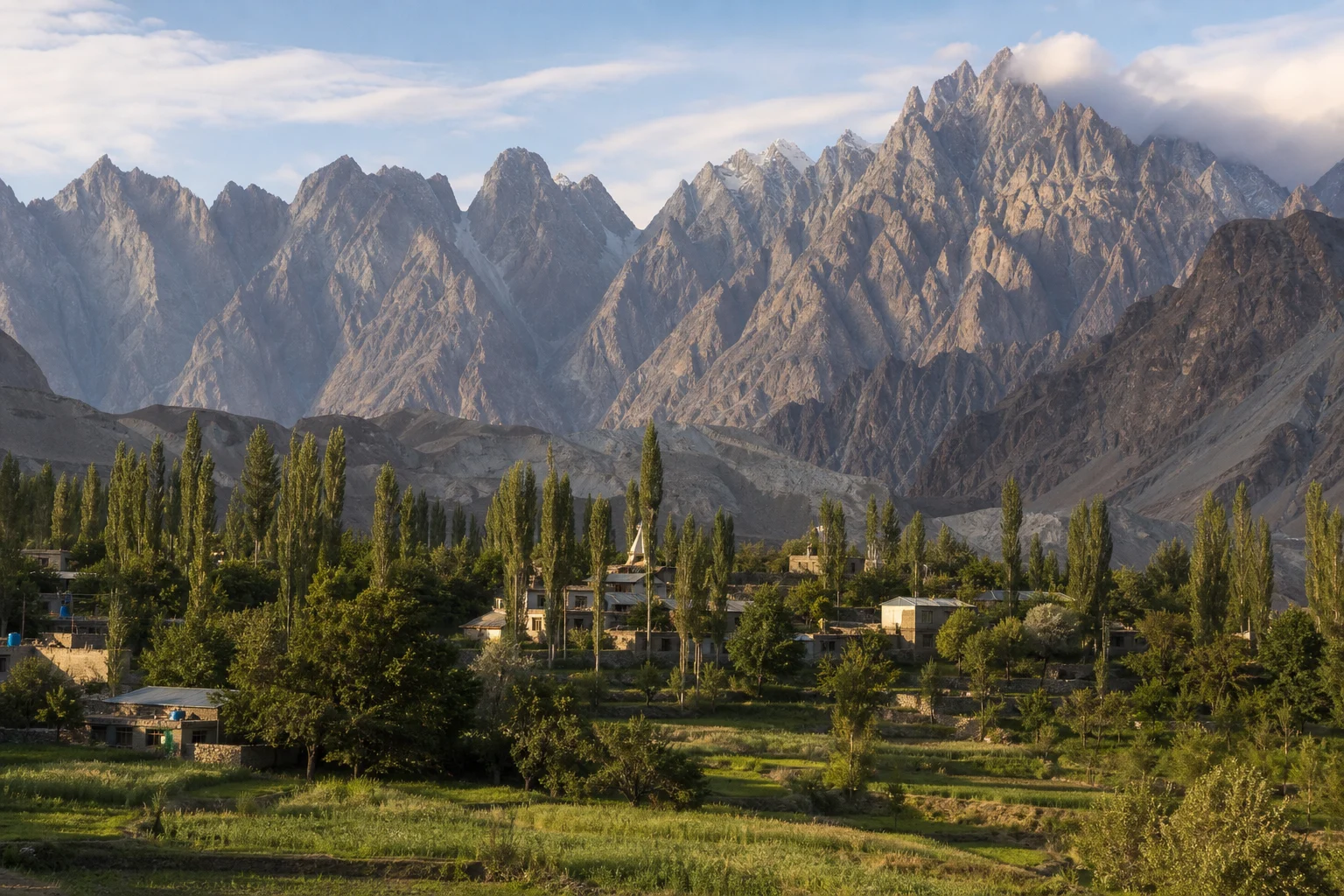
The settlements become smaller. The mountains become larger. Green fields appear almost impossibly between walls of stone, while rivers born from glaciers cut through narrow valleys beneath some of the highest peaks on Earth.
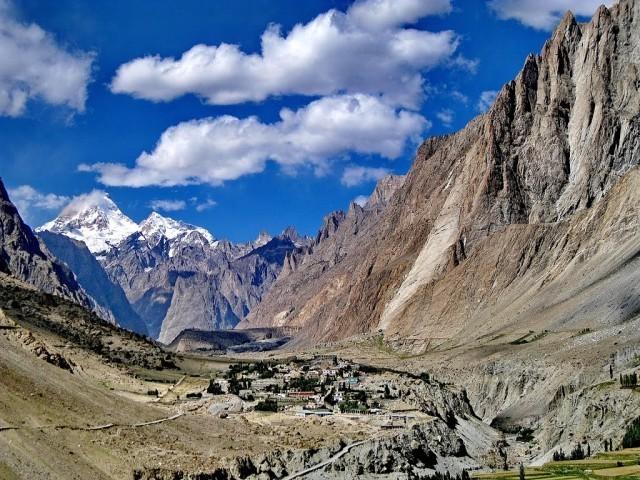
At the far end of this journey lies Hushe — a remote Balti village in Gilgit-Baltistan that the outside world often knows only as a gateway to the Karakoram.
Hushe has no famous commercial district, giant monument or bustling tourist boulevard. It is not the sort of place that traditionally appears on the first page of Pakistan's tourism brochures.
Yet for generations, people from this valley have helped explorers, trekkers and mountaineers enter one of the most formidable landscapes on the planet. Porters, guides, cooks, farmers and families from these communities became part of the hidden infrastructure behind journeys toward Masherbrum, K6, K7, Gondogoro La and the greater Karakoram.
But describing Hushe only as a base for climbers misses its real story.
Because before foreign expeditions arrived carrying ropes, tents and ice axes, families were already surviving here.
And long after the climbers leave, they remain.
A Village at the End of Pakistan's Mountain Roads
Hushe lies in Ghanche District of Gilgit-Baltistan, beyond Khaplu and deep inside Pakistan's Karakoram mountain system.
Travellers normally reach the area by first travelling to Skardu and then following the route toward Khaplu before turning deeper into Hushe Valley. As the journey continues, towns give way to smaller settlements and the mountains begin to dominate nearly every direction.
The transition is as psychological as it is geographical.
Skardu still feels connected to a wider urban world. Khaplu is quieter, but its markets, historic buildings and established neighbourhoods still provide the rhythms of a recognised town.
Continue toward Hushe and the landscape begins taking control.
Roads narrow. Villages appear beneath massive slopes. Cultivated fields occupy precious stretches of usable ground, and trees follow channels of irrigation water through an otherwise severe landscape.
Eventually the road reaches Hushe.
Beyond it, the Karakoram continues largely on foot.
“For the outside world, Hushe feels like an ending. For the mountains, it is only the beginning.”
Untold Story of PakistanHushe Valley Is More Than One Village
The name Hushe is often used for both the upper village and the broader valley surrounding it.
That distinction matters.
The wider valley contains several settlements whose communities have developed around farming, livestock, seasonal work, local trade and, increasingly, trekking and mountaineering.
Hushe village sits toward the upper end of this inhabited landscape.
When visitors speak of entering untouched wilderness, it is easy to forget that they are travelling through a landscape that has been lived in, cultivated and understood by local families for generations.
These valleys are not empty spaces waiting to be discovered.
They contain homes, agricultural fields, irrigation channels, religious buildings, traditional paths and generations of memory.
The mountains may dominate the photographs.
But the valley belongs to its people.
Living Beneath Masherbrum
Few mountains define this part of Baltistan more powerfully than Masherbrum.
Rising approximately 7,821 metres, Masherbrum is one of the great mountains of the Karakoram.
During early surveying of the region, it was identified as K1. The mountain that later became internationally famous as K2 retained its survey designation, while K1 became known by its local name: Masherbrum.
Masherbrum never achieved the same worldwide celebrity as K2.
Perhaps that makes it an appropriate mountain for Hushe.
Both are extraordinary, both are well known within serious mountaineering circles, and both remain less familiar to the wider public than their importance deserves.
Masherbrum was first successfully climbed in 1960.
For international climbers, standing beneath the mountain can be the achievement of a lifetime.
For families in Hushe, it is simply part of the horizon.
Children grow beneath it.
Farmers work beneath it.
Livestock graze beneath it.
Families experience changing seasons beneath a mountain that people on the other side of the world may spend years planning to see only once.
What makes that contrast remarkable?
What is an expedition for an outsider is everyday geography for the people who live here. The mountains that inspire international adventurers are the same mountains local families see while farming, walking to neighbouring settlements and preparing for winter.
The Village Behind the Great Expeditions
Mountaineering history is normally written around summits.
Who reached the top first?
Which route did they follow?
Which climber survived?
Which expedition failed?
Far less attention is given to the communities that allowed those expeditions to exist.
For decades, climbers entering Pakistan's great mountain ranges have depended on local porters, guides, cooks, drivers, high-altitude workers and logistical teams.
Hushe became deeply connected to this world.
Heavy expedition equipment had to travel from settlements toward base camps through terrain where vehicles could no longer operate.
Local knowledge became essential.
Men who understood trails, weather, glaciers, rivers and mountain conditions became indispensable to visiting expeditions.
What foreign climbers regarded as adventure became work for local families.
Sometimes it was dangerous work.
But it also created economic opportunities in a region where conventional employment was historically limited.
Behind many famous photographs from the Karakoram are people whose names rarely entered the history books but whose knowledge helped make the journey possible.
The Gateway to a Kingdom of Mountains
Walk beyond Hushe and the geography opens into some of Pakistan's most spectacular high-altitude landscapes.
The region provides access toward Masherbrum and several extraordinary mountain valleys, glaciers and climbing areas.
Masherbrum
The 7,821-metre giant that dominates the region and remains one of the legendary peaks of the Karakoram.
Charakusa Valley
A dramatic valley of huge granite walls and technical climbing objectives, including the celebrated K6 and K7 region.
Gondogoro La
A famous high mountain connection linking the greater Baltoro trekking landscape with the valleys descending toward Hushe.
Laila Peak Region
One of the most visually distinctive mountain environments in Pakistan, admired for its steep and elegant profile.
This creates an extraordinary geographical relationship between Hushe and the world's mountaineering community.
A traveller can spend days surrounded by glaciers, high passes and peaks before eventually descending toward inhabited land.
At the edge of that transition is Hushe.
It is one of the places where the inhabited world meets the high Karakoram.
Before Tourism, There Was Survival
Photographs of Hushe can easily create the impression of a mountain paradise.
Green fields sit beneath grey rock.
Apricot trees soften the villages.
Streams flow beneath enormous snow-covered mountains.
But beauty should never be confused with ease.
Life at this altitude has historically demanded constant adaptation.
Agriculture is essential, yet the productive season is short. Harsh winters can limit cultivation for months, making every usable field important.
In such an environment, flat agricultural land is not merely beautiful scenery.
It can represent food security.
Irrigation channels are not decorative.
They keep fields alive.
Fruit trees are not simply picturesque.
They are assets.
Livestock is not part of a staged rural scene.
It contributes to household survival.
The photograph and the reality
A visitor may notice the mountain first. A local farmer may notice water availability, the condition of a field, changing weather and how much food can be stored before winter.
The Food Economy of Hushe
One of the important modern stories of Hushe is not about climbing at all.
It is about agriculture.
Apricots, herbs, vegetables and other local products have economic value, but isolation makes reaching larger markets difficult.
That creates one of the valley's biggest contradictions.
People may possess useful land, agricultural knowledge and valuable products while still struggling to turn those resources into dependable income.
The problem is not always production.
Sometimes it is access.
Road conditions matter.
Storage matters.
Packaging matters.
Transport matters.
Communication matters.
A farmer close to a major Pakistani city can potentially reach wholesalers, retailers and millions of consumers.
A farmer deep inside Hushe Valley operates within an entirely different economic reality.
The Women Behind the Valley's Economy
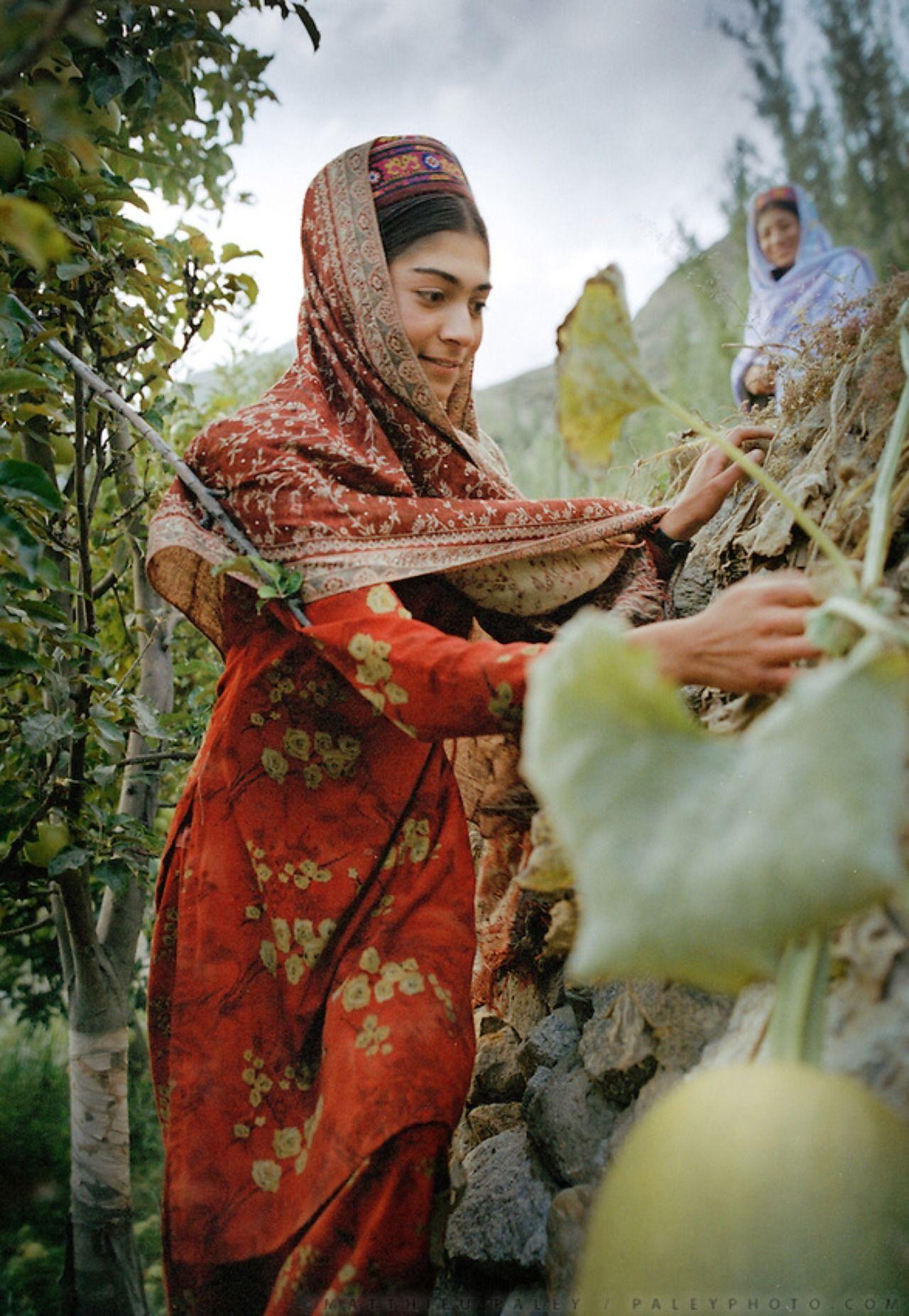
The story of Hushe cannot be understood without recognising the contribution of women.
Across remote mountain communities, women frequently play major roles in agriculture while simultaneously managing households and caring for families.
Yet geographical and digital isolation can restrict their access to wider markets, training and economic opportunities.
Development initiatives in the wider valley have explored ways of turning locally available products — including herbs — into marketable goods.
The significance of such experiments extends beyond one product.
They show that development in remote Pakistan does not always require creating an entirely new economy.
Sometimes the knowledge already exists.
The plants already exist.
The skills already exist.
What may be missing are connections, packaging, training, technology and access to buyers.
Water Everywhere — Yet Clean Water Can Still Be a Challenge
Few things illustrate the contradictions of mountain life more clearly than water.
Hushe exists in a landscape created by snow, glaciers, streams and rivers.
From a distance it may appear that water should be unlimited.
Yet access to reliably clean household drinking water in remote mountain communities depends on infrastructure.
Water must be captured.
It must be transported.
It must remain protected from contamination.
It must reach homes consistently.
Natural abundance alone does not guarantee household security.
The same principle applies to many resources across northern Pakistan.
A glacier can contain an unimaginable quantity of water while a village beneath it can still struggle with the infrastructure required to make that water reliably safe.
The Architecture of Survival
The older parts of Hushe reflect generations of adaptation to the mountain environment.
Traditional structures used locally available materials such as stone, timber and mud.
These were practical choices rather than aesthetic trends.
Buildings needed to survive cold winters.
Materials had to be available locally.
Living spaces needed to work within a compact settlement.
Streets were shaped around people walking rather than modern vehicles.
Religious and communal buildings also formed an important part of the historical village core.
The resulting architecture can appear deeply picturesque to a modern visitor.
But it was never designed as a tourism attraction.
It was designed to survive.
Faith, Family and Community
Life in remote settlements is rarely divided into the separate institutions familiar to a large city.
Family, farming, faith, education and community life overlap.
Communal religious spaces become more than architectural landmarks.
They become places where generations gather and where memory is passed forward.
In communities separated by difficult geography, neighbours become especially important.
When institutions are far away, people depend more heavily on each other.
When winter interrupts travel, local cooperation becomes even more important.
Hushe survived not only because its people learned how to endure the mountains.
They learned how to live within them together.
When Tourism Changed Hushe
For generations, the mountains surrounding the valley were barriers.
They made transport difficult.
They limited economic access.
They isolated communities from Pakistan's larger population centres.
Then something changed.
The outside world began travelling to Hushe precisely because the mountains were difficult.
Adventure tourism turned geography that had long created hardship into a potential economic resource.
Climbers required porters.
Trekkers required guides.
Expeditions required food and accommodation.
Equipment required transportation.
Visitors required local knowledge.
A new relationship between the valley and the outside world gradually developed.
The mountains had not changed.
The world's relationship with them had.
But Tourism Does Not Solve Everything
It would be easy to tell a simple story in which mountaineering arrived, employment grew and isolation disappeared.
The reality is more complicated.
Tourism is seasonal.
Weather can interrupt travel.
Road conditions can change.
Visitor numbers can rise and fall.
Not every household benefits equally.
And income from trekking does not automatically solve challenges involving healthcare, education, clean water, communications and market access.
The same rough road that may feel adventurous to a tourist can mean something completely different to someone living in the valley.
For a farmer, it can determine whether produce reaches a market.
For a family, it can determine how easily supplies arrive.
For someone needing medical treatment, the consequences can be far more serious.
Perspective changes everything.
Pakistan's Mountain Stories Are Usually Told From the Summit
Pakistan is home to some of the greatest mountains on Earth.
- K2
- Nanga Parbat
- Gasherbrum I
- Broad Peak
- Masherbrum
Documentaries tell us about the climbers who attempt them.
Newspapers celebrate successful summits.
Books recount triumphs and disasters.
Photographs show tiny human figures against impossible walls of rock, snow and ice.
But perhaps we have been looking in only one direction.
Instead of looking only upward toward the summit, look downward into the valleys.
Who carried the equipment?
Who knew the trail?
Who prepared the food?
Who supplied the expedition?
Who waited at home?
Who remained after the expedition packed its tents and left?
There is another history of Pakistan's mountains waiting to be told.
It belongs to communities like Hushe.
The Journey to Hushe
Travellers do not need to be professional mountaineers to experience Hushe Valley.
The village itself can be the destination.
From Skardu, the journey continues toward Ghanche District and Khaplu before entering increasingly remote mountain roads.
Travellers should treat journey times as approximate.
Weather, road conditions and local circumstances can significantly affect travel in northern Pakistan.
The warmer months are generally the most practical period for trekking and mountain travel, while winter creates an entirely different environment.
Important Travel Note
Visitors planning high-altitude trekking, glacier crossings, Gondogoro La, technical climbing or expeditions should always obtain current local information, use appropriate licensed guides and verify weather, route and permit requirements before departure.
How to Visit Without Damaging What You Came to See
Remote mountain communities can change rapidly when tourism grows faster than local infrastructure.
Visitors therefore carry responsibility.
- Use locally owned accommodation, transport and guiding services where possible.
- Pay local guides and porters fairly for their work and expertise.
- Ask permission before taking close photographs of residents.
- Do not treat children or local families as tourist photography props.
- Respect religious buildings and community spaces.
- Avoid entering homes, agricultural fields or private areas without permission.
- Carry rubbish out of sensitive mountain areas.
- Buy locally produced food and products whenever practical.
- Never treat poverty or difficult living conditions as an attraction.
Most importantly, visitors should never expect the residents of Hushe to perform an artificial version of “authentic mountain life” for tourists.
They are not part of the scenery.
They are the people who live there.
The Meaning of the Last Village
Calling Hushe the “last village” sounds romantic.
It suggests an edge.
A final inhabited settlement before wilderness takes over.
But for the people who live there, Hushe is not the end of anything.
It is home.
Children grow up here.
Families farm here.
People marry here.
Men leave for expeditions and return.
Women manage households, families and agricultural work.
Winter arrives.
Snow covers the mountains.
Spring returns.
Apricot trees flower again.
Irrigation water returns to fields.
Tourists arrive.
Tourists leave.
And the mountains remain.
Where the Road Ends, the Story Continues
At Hushe, engines eventually stop.
Beyond the village lie paths, glaciers, granite walls and the great mountains of the Karakoram.
For an adventurous traveller, this may appear to be where exploration begins.
But perhaps the greatest discovery is not beyond the village at all.
Perhaps it is the village itself.
A community that survived long before adventure tourism discovered it.
A place whose residents became part of the hidden story behind international mountaineering.
A valley where families cultivate land beneath mountains approaching eight thousand metres, where old traditions meet modern economic challenges and where extraordinary natural wealth can exist beside difficult human circumstances.
The world remembers the peaks.
It remembers the climbers who stood upon them.
But beneath those mountains are communities whose stories have received far less attention.
Hushe is one of them.
And perhaps the untold story of Pakistan's mountains has never really been only about who reached the summit.
Perhaps it has always been about the people who were already there.
Exploring the places, people, heritage and stories of Pakistan that deserve to be remembered.